WHETHER THE POSSESSION OF A HINDU FEMALE ON PARTITION ACQUIRE ABSOLUTE OWNERSHIP AFTER THE COMMENCEMENT OF THE ACT? WHETHER SHE CAN DISPOSE OF THE ESTATE AS PER HER WISH?
TANMOY MUKHERJI INSTITUTE OF JURIDICAL SCIENCE
Dr. Tanmoy Mukherji
Advocate
WHETHER THE POSSESSION OF A HINDU FEMALE ON PARTITION ACQUIRE ABSOLUTE OWNERSHIP AFTER THE COMMENCEMENT OF THE ACT? WHETHER SHE CAN DISPOSE OF THE ESTATE AS PER HER WISH?
Tanmoy Mukherji
Advocate
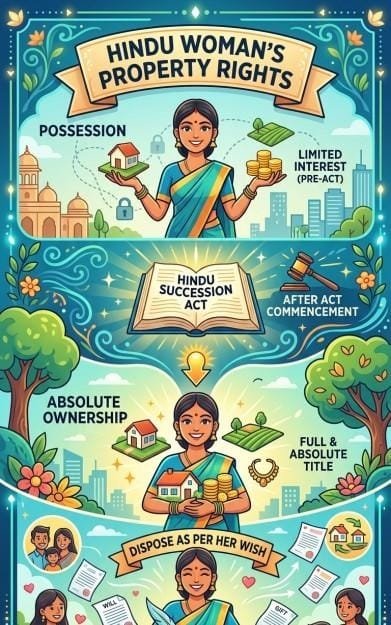
Under Section 14 of the Hindu Succession Act, 1956, the limited estate of a Hindu female in property acquired in any manner, including on partition, is enlarged into her absolute property, unless the case falls under Section 14(2).
SECTION 14(1), HSA - GENERAL RULE
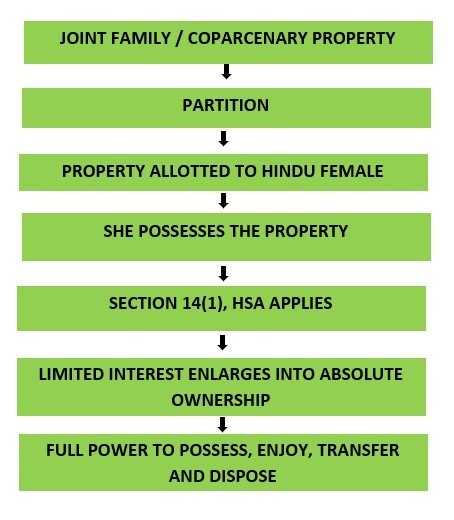
Property possessed by a female Hindu, whether acquired before or after the commencement of the Act, shall be held by her as full owner and not as a limited owner.
Explanation to Section 14(1):
Includes property acquired by:
❖Inheritance or devise
❖Partition
❖Maintenance or arrears of maintenance
❖Gift
❖Own skill or exertion
❖Purchase
❖Prescription
❖Any other manner
Therefore, property received on partition is expressly covered by Section 14(1).
EFFECT OF PARTITION-
CAN SHE DISPOSE OF THE PROPERTY ACCORDING TO HER WISH?
YES.
Once she becomes the absolute owner under Section 14(1), she has all the incidents of full ownership.
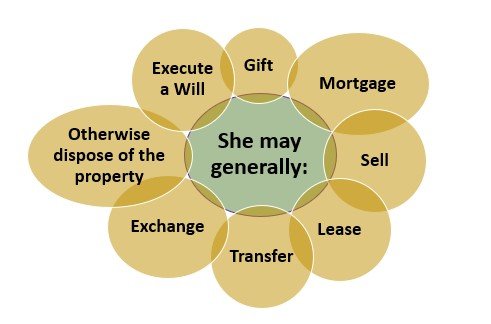
She does not ordinarily require the consent of reversioners merely because the property was once a limited estate.
SECTION 14(1) vs SECTION 14(2)-
|
SECTION 14(1)
|
SECTION 14(2)
|
|
Enlarges an existing limited interest into absolute ownership.
|
Preserves certain restricted estates (Exception to Section 14(1)).
|
|
Applies widely to property possessed by a Hindu female.
|
Applies where property is acquired by gift, will, instrument, decree, order or award with restricted terms.
|
|
Includes property acquired on partition, inheritance, maintenance, etc.
|
Where the instrument itself creates a new restricted right for the first time.
|
|
Operates where there is a pre-existing legal right of the female.
|
Creates/continues a restricted estate if the terms expressly so provide.
|
|
Liberal interpretation.
|
Narrow construction as it is an exception.
|
PRE-EXISTING RIGHT TEST-
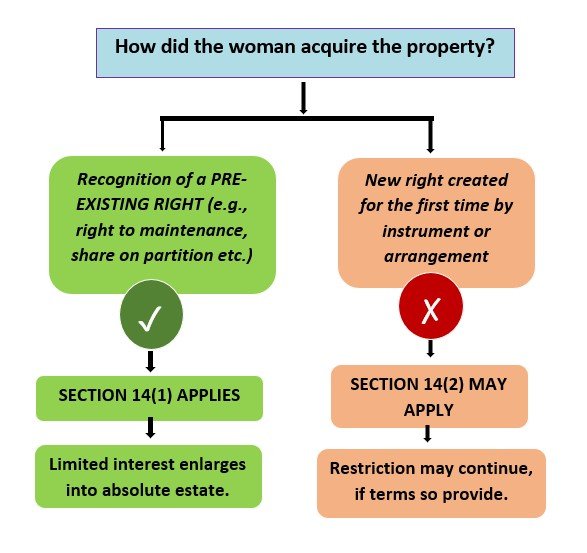
Section 14(2) is an exception and must be construed strictly.
LEADING CASE LAWS-
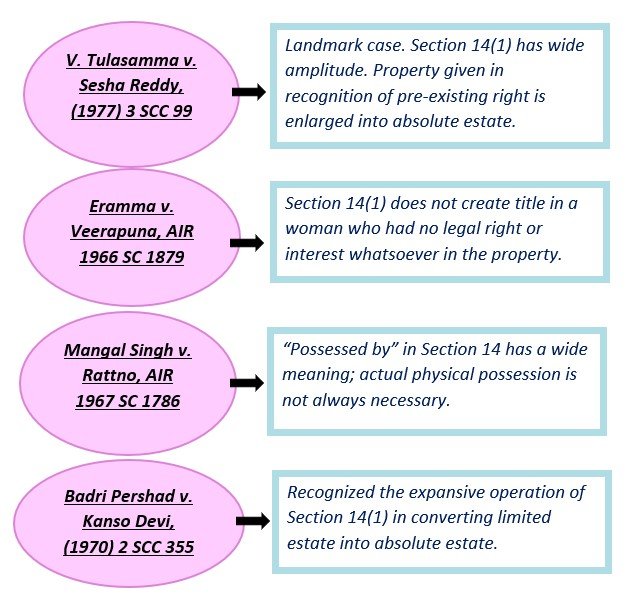
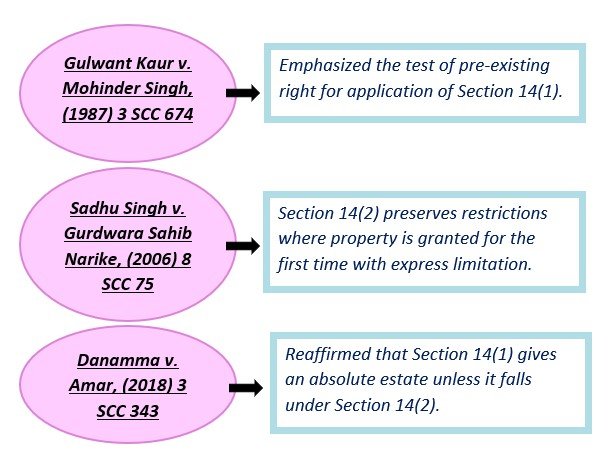
RELATIONSHIP WITH SECTION 14(2) – WHEN RESTRICTION CONTINUES-
Case falls under Section 14(2) where:
❖Property is given by gift, will, instrument, decree, order or award.
❖Terms of the instrument create a restricted estate for the first time.
❖The female had no pre-existing right.
RESULT-

Restriction imposed by the instrument continues. She cannot dispose beyond the terms of restriction.
SECTION 14(1) vs SECTION 14(2) –DETAILED COMPARISON-
|
BASIS |
SECTION 14(1) |
SECTION 14(2)
|
|
Nature |
Enlargement of limited estate |
Exception – preserves restriction |
|
Source of right |
Pre-existing legal right recognized |
New right created by instrument
|
|
Examples |
Partition, maintenance, inheritance etc. |
Gift with life interest, limited estate by will/instrument
|
|
Interpretation |
Liberal |
Strict
|
|
Effect |
Absolute ownership |
Restricted estate may continue
|
|
Power of disposal |
Full power of disposition |
Only as per terms of restriction
|
FLOWCHART-
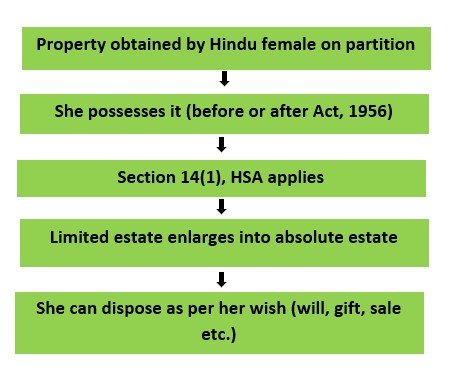
"Section 14(1) transforms the limited estate of a Hindu female into absolute ownership, so that she may enjoy and dispose of the property as a full owner."

we believe in a holistic approach to legal education building not just lawyers, but socially conscious leaders of tomorrow.
