SECTION 8 – HINDU MARRIAGE ACT, 1955, REGISTRATION OF HINDU MARRIAGES
TANMOY MUKHERJI INSTITUTE OF JURIDICAL SCIENCE
Dr. Tanmoy Mukherji
Advocate
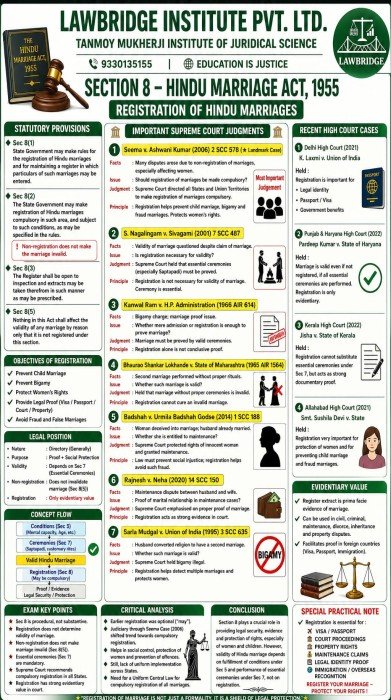
SECTION 8 – HINDU MARRIAGE ACT, 1955, REGISTRATION OF HINDU MARRIAGES-
Tanmoy Mukherji
Advocate
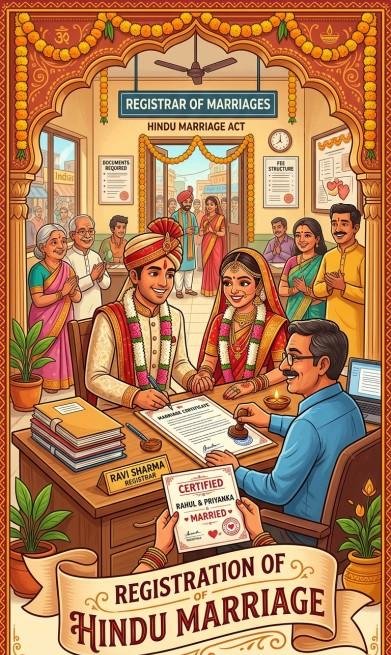
STATUTORY PROVISIONS-
Sec 8(1)-
State Government may make rules for the registration of Hindu marriages and for maintaining a register in which particulars of such marriages may be entered.
Sec 8(2)-
The State Government may make registration of Hindu marriages compulsory in such area, and subject to such conditions, as may be specified in the rules.
! Non-registration does not make the marriage invalid.
Sec 8(3)-
The Register shall be open to inspection and extracts may be taken therefrom in such manner as may be prescribed.
Sec 8(5)-
Nothing in this Act shall affect the validity of any marriage by reason only that it is not registered under this section.
OBJECTIVES OF REGISTRATION-
→Prevent Child Marriage
→Prevent Bigamy
→Protect Women’s Rights
→Provide Legal Proof (Visa / Passport / Court / Property)
→Avoid Fraud and False Marriages.
LEGAL POSITION-
Nature: Directory (Generally)
Purpose: Proof + Social Protection
Validity: Depends on Sec 7 (Essential Ceremonies)
Non-registration: Does not invalidate marriage (Sec 8(5))
Registration: Only evidentiary value
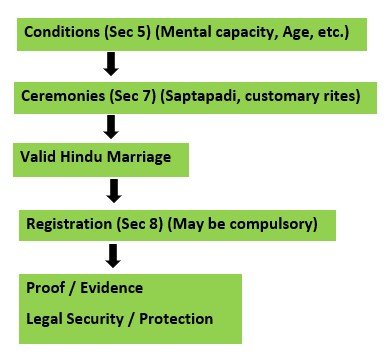
CONCEPT FLOW-
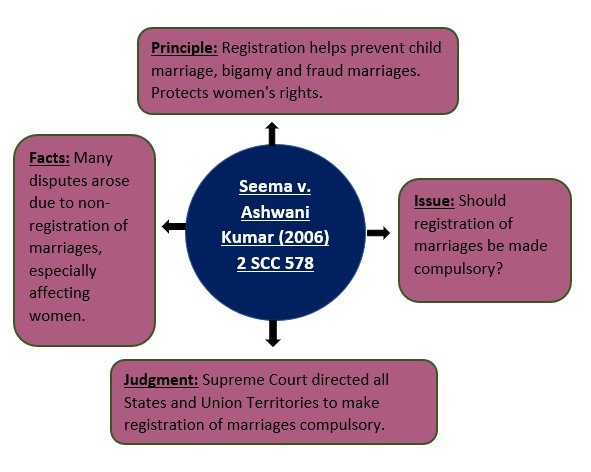
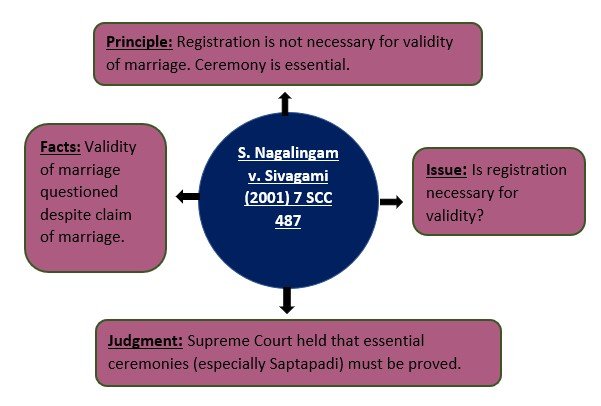
IMPORTANT SUPREME COURT JUDGMENTS-
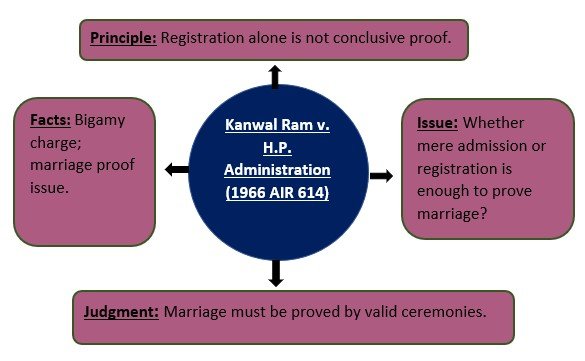
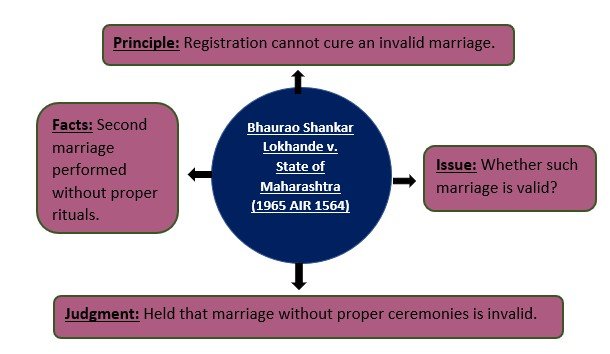
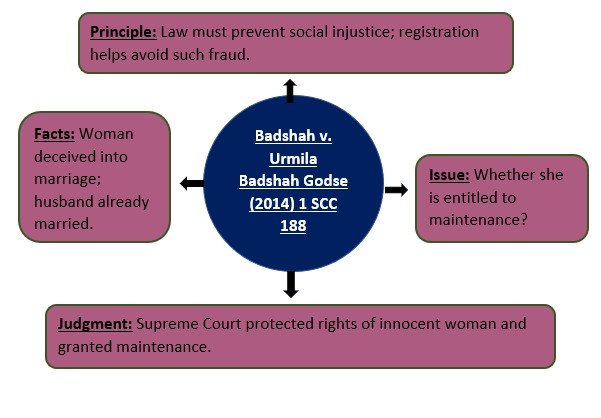
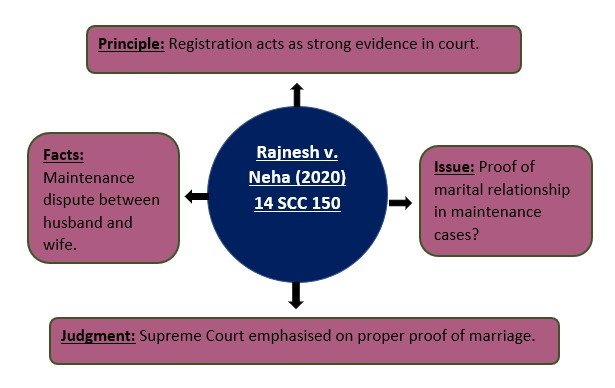
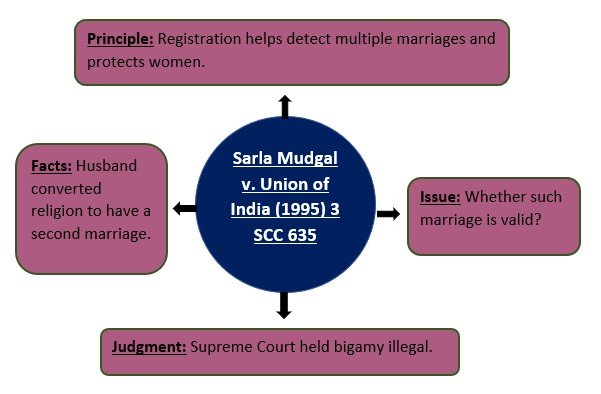
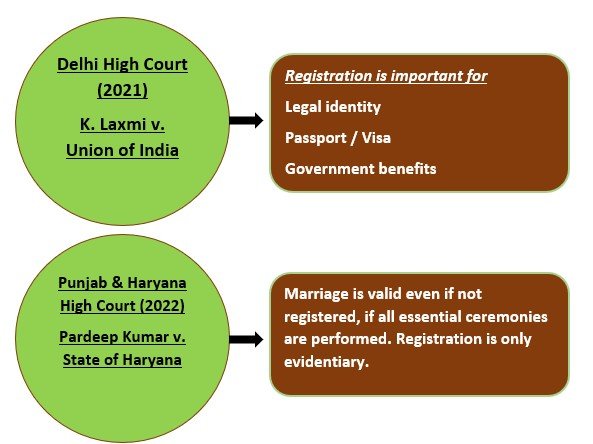
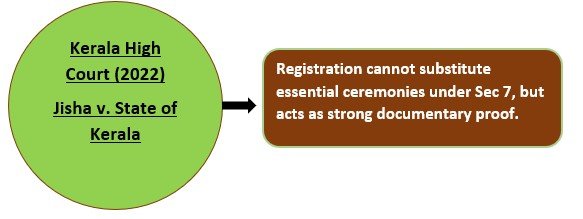
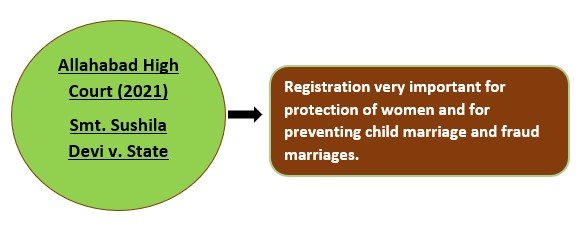
RECENT HIGH COURT CASES-
EVIDENTIARY VALUE-
→Register extract is prima facie evidence of marriage.
→Can be used in civil, criminal, maintenance, divorce, inheritance and property disputes.
→Facilitates proof in foreign countries (Visa, Passport, Immigration).
EXAM KEY POINTS-
→Sec 8 is procedural, not substantive.
→Registration does not determine validity of marriage.
→Non-registration does not make marriage invalid (Sec 8(5)).
→Essential ceremonies (Sec 7) are mandatory.
→Supreme Court recommends compulsory registration in all States.
→Registration has strong evidentiary value in court.
CRITICAL ANALYSIS-
→Earlier registration was optional (“may”).
→Judiciary through Seema Case (2006) shifted trend towards compulsory registration.
→Helps in social control, protection of women and prevention of offences.
→Still, lack of uniform implementation across States.
→Need for a Uniform Central Law for compulsory registration of all marriages.
CONCLUSION-
Section 8 plays a crucial role in providing legal security, evidence of women and children. However, validity of Hindu marriage depends on fulfilment of conditions under Sec 5 and performance of essential ceremonies under Sec 7, not on registration.
SPECIAL PRACTICAL NOTE-
Registration is essential for:
→VISA / PASSPORT
→COURT PROCEEDINGS
→PROPERTY RIGHTS
→MAINTENANCE CLAIMS
→LEGAL IDENTITY PROOF
→IMMIGRATION / OVERSEAS RECOGNITION
REGISTER YOUR MARRIAGE – PROTECT YOUR RIGHTS!

we believe in a holistic approach to legal education building not just lawyers, but socially conscious leaders of tomorrow.
