SCOPE OF PUBLIC POLICY
TANMOY MUKHERJI INSTITUTE OF JURIDICAL SCIENCE
Dr. Tanmoy Mukherji
Advocate
SCOPE OF PUBLIC POLICY —
Tanmoy Mukherji
Advocate
MEANING-
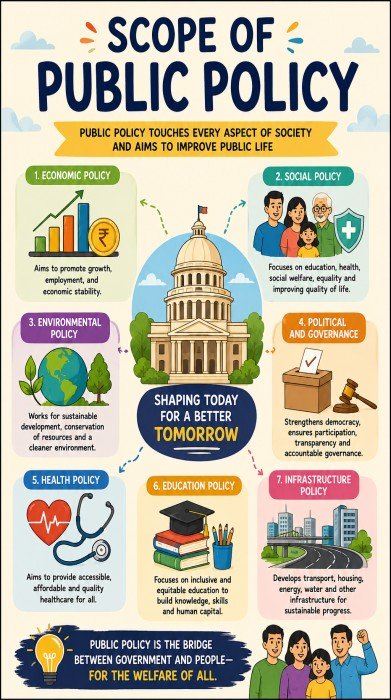
The scope of public policy refers to the wide range of areas and activities which come within the purview of government action to promote public welfare and achieve national goals.
SCOPE OF PUBLIC POLICY – OVERVIEW-
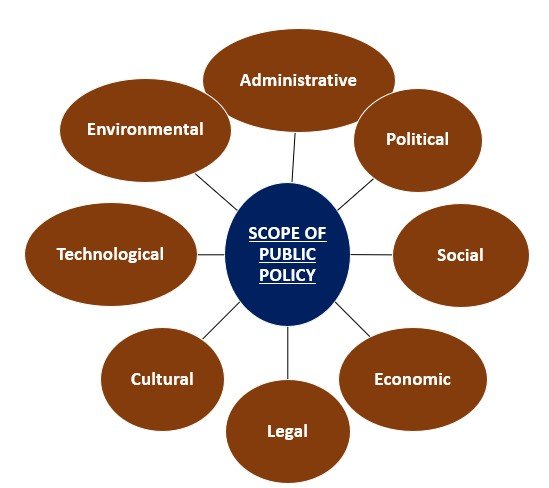
Public policy has a very wide scope. It covers almost every aspect of human life and national development. It includes economic, social, political, environmental, cultural, technological and administrative areas.
MAJOR AREAS COVERED UNDER THE SCOPE OF PUBLIC POLICY-
Economic Policy: Deals with production, distribution, consumption, employment, income, inflation, trade, taxation, industrial growth, etc.
Social Policy: Concerned with education, health, housing, poverty alleviation, social justice, women and child welfare, population control, etc.
Political Policy: Relates to governance, public order, national security, foreign policy, decentralization, democratic reforms, etc.
Administrative Policy: Covers organization, management, personnel, financial administration, public service delivery, e-governance, etc.
Environmental Policy: Includes pollution control, conservation of natural resources, climate change, biodiversity, sustainable development, etc.
Technological Policy: Relates to science and technology development, digital infrastructure, innovation, cyber security, technology adoption, etc.
Cultural Policy: Promotes art, literature, sports, heritage, language, tourism and national integration.
Legal Policy: Deals with law making, justice delivery, human rights, legal reforms, judicial policies, etc.
FACTORS THAT DETERMINE THE SCOPE OF PUBLIC POLICY-
→Needs and Problems of the Society
→Political Ideology of the Government
→Economic Development and Resources
→Constitutional and Legal Framework
→Technology and Innovation
→Public Opinion and Pressure Groups
→Globalization and International Influence
→Administrative Capacity
SIGNIFICANCE / IMPORTANCE OF THE SCOPE OF PUBLIC POLICY-
→Helps in comprehensive development of the nation.
→Addresses diverse needs and problems of people.
→Promotes social justice and equality.
→Ensures balanced economic growth.
→Protects environment and promotes sustainability.
→Encourages good governance and accountability.
→Enhances quality of life and human welfare.
→Strengthens democracy and national integration.
DIMENSIONS OF SCOPE-
Wide in Content: It includes all sectors of life.
Wide in Area: It covers urban, rural and regional development.
Wide in Time: It includes short-term, medium-term and long-term policies.
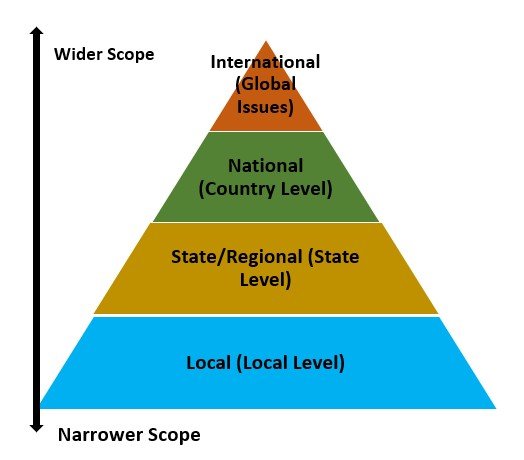
Wide in Level: It operates at local, state, national and international levels.
Wide in Impact: It affects individuals, groups, institutions and society as a whole.
LEVELS OF POLICY SCOPE-
EXAMPLES OF PUBLIC POLICY UNDER DIFFERENT AREAS-
|
Area |
Examples of Policies
|
|
Economic |
GST Policy, Industrial Policy, Fiscal Policy
|
|
Social |
National Education Policy, Health Policy, Rural Housing Policy
|
|
Political |
Election Reforms, Foreign Policy, National Security Policy
|
|
Administrative |
Right to Information Act, Civil Services Reforms, e-Governance Policy
|
|
Environmental |
National Green Policy, Forest Policy, Climate Change Policy |
|
Technological |
Digital India, Start-up Policy, Cyber Security Policy
|
|
Cultural |
National Culture Policy, Sports Policy, Heritage Conservation Policy
|
|
Legal |
Legal Aid Policy, Human Rights Policy, Judicial Reforms |
INTERRELATIONSHIP OF DIFFERENT AREAS-
IN BRIEF-
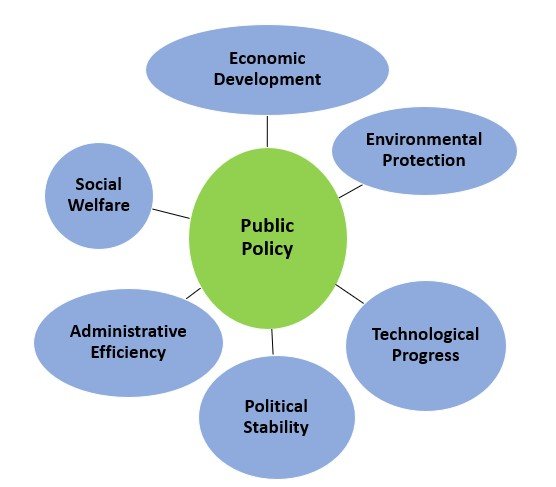
The scope of public policy is very wide and diverse. It includes economic, social, political, administrative, environmental, technological, cultural and legal areas. As society changes, the scope of public policy also expands to meet new challenges and opportunities for the welfare of the people.
CONCLUSION-
The wide scope of public policy enables the government to address the multifaceted needs of society and achieve overall development, justice, security and prosperity for all citizens.
"Public policy covers all those fields where the government makes decisions and takes actions for the welfare of the people."
— Dr. Carl J. Friedrich

we believe in a holistic approach to legal education building not just lawyers, but socially conscious leaders of tomorrow.
