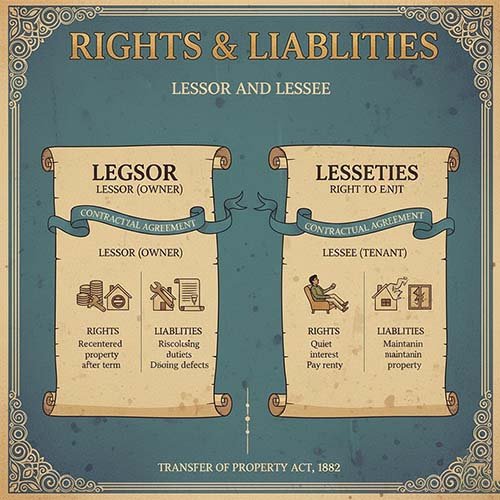
RIGHTS AND LIABILITIES OF LESSOR AND LESSEE
Transfer of Property Act, 1882
Dr. Tanmoy Mukherji
Advocate
RIGHTS AND LIABILITIES OF LESSOR AND LESSEE [Section 108 of the Transfer of Property Act, 1882]-
Tanmoy Mukherji
Advocate
Section 108 of the Transfer of Property Act, 1882 lays down the provisions relating to the Rights and Liabilities of the Lessor and Lessee.
It runs as follows-
Rights and Liabilities of the Lessor-
(a) The Lessor is bound to disclose to the lessee any material defect in the property, with reference to its intended use, of which the former is and the latter is not aware, and which the latter could not with ordinary case discover.
(b) The Lessor is bound on the lessee's request to put him in possession of the property.
(c) The lessor shall be deemed to contract with the lessee that, if the latter pays the rent reserved by the lease and performs the contracts binding on the lessee, he may hold the property during the time limited by the lease without interruption.
The benefit of such contract shall be annexed to and go with the lessee's interest as such, and may be enforced by every person in whom that interest is for the whole or any part thereof from time to time vested.
Rights and Liabilities of the Lessee-
(a) If during the continuance of the lease any accession is made to the property, such accession (subject to the law relating to alluvion for the time being in force), shall be deemed to be comprised in the lease.
(b) If by fire, tempest or flood, or violence of an army or of a mob, or other irresistible force, any material part of the property be wholly destroyed or rendered substantially and permanently unfit for the purpose for which it was let, the lease shall, at the option of the lessee, be void.
Provided that, if the injury be occasioned by the wrongful act or default of the lessee, he shall not be entitled to avail himself of the benefit of this provision.
(c) If the lessor neglects to make, within a reasonable time after notice, any repairs, which he is, bound to make to the property, the lessee may make the same himself, and deduct the expense of such repairs with interest from the rent, or otherwise recover it from the lessor.
(d) If the lessor neglects to make any payment which he is bound to make, and which, if not made by him, is recoverable from the lessee or against the property, the lessee may make such payment himself, and deduct it with interest from the rent, or otherwise recover it from the lessor.
(e) The lessee may even after determination of the lease remove, at any time whilst he is in possession of the property leased, but not afterwards, all things which he has attached to the earth; provided he leaves the property in the state in which he received it.
(f) When a lease of uncertain duration determines by any means except the fault of the lessee, he or his legal representative is entitled to all the crops planted or sown by the lessee and growing upon the property when the lease determines, and to free ingress and egress to gather and carry them.
(g) The lessee may transfer absolutely or by way of mortgage or sub lease the whole or any part of his interest in the property, and any transferee of such interest or part may again transfer it. The lessee shall not, by reason only of such transfer, cease to be subject to any of the liabilities attaching to the lease.
Nothing in this clause shall be deemed to authorize a tenant having an untransferable right of occupancy, the farmer of an estate in respect of which default has been made in paying revenue, or the lessee of an estate under the management of a Court of Wards, to assign his interest as such tenant, farmer or lessee.
(h) The lessee is bound to disclose to the lessor any fact as to the nature or extent of the interest, which the lessee is about to take, of which the lessee is, and the lessor is not, aware, and which materially increase the value of such interest.
(i) The lessee is bound to pay or tender, at the proper time and place, the premium or rent to the lessor or his agent in this behalf.
(j) The lessee is bound to keep, and on the termination of the lease to restore, the property in as good condition as it was in at the time when he was put in possession, subject only to the changes caused by reasonable wear and tear or irresistible force, and to allow the lessor and his agents, at all reasonable times during the term, to enter upon the property and inspect the condition thereof and give or leave notice of any defect in such condition; and, when such defect has been caused by any act or default on the part of the lessee, his servants or agents, he is bound to make it good within three months after such notice has been given or left.
(k) If the lessee becomes aware of any proceeding to recover the property or any part thereof, or of any encroachment made upon, or any interference with, the lessor's rights concerning such property, he is bound to give, with reasonable diligence, notice thereof to the lessor.
(l) The lessee may use the property and its products (if any) as a person of ordinary prudence would use them if they were his own; but he must not use, or permit another to use, the property for a purpose other than that for which it was leased, or fell or sell timber, pull down or damage buildings belonging to the lessor, or work mines or quarries not open when the lease was granted, or commit any other act which is destructive or permanently injurious thereto.
(m) He must not, without the lessor's consent, erect on the property any permanent structure, except for agricultural purposes.
(n) On the determination of the lease, the lessee is bound to put the lessor into possession of the property.
-Section 108 lays down the rights and liabilities of the lessor and the lessee. But these rights and liabilities are not absolute. They are subject to a contract or local usage to the contrary but not subject to any local law.
Lessor's Rights and Liabilities-
(1) Lessor must disclose to the lessee any defect in the property, which may hinder the intended use of the property.
(2) Lessor must put the lessee in possession of the property.
(3) The lessee must be allowed to remain in peaceful possession of the property if he pays rent and performs his part of the contract of lease.
If the lessee transfers the property or the property vests in some other person, such other person will be entitled to the benefits of the contract.
Lessee's Rights and Liabilities-
(1) If there is accession to the property say by alluvion, then subject to the law relating to alluvion, the lease shall be deemed to relate to this additional property also.
(2) If the property is wholly destroyed or rendered substantially and permanently unfit for the purpose for which it was let by:
(i) Fire;
(ii) Tempest;
(iii) Flood;
(iv) Violence of army or mob;
(v) Other irresistible force then at the option of lessee the lease shall be void.
(3) If the property needs repairs, then the lessee shall give notice to the lessor to get the repairs done within a reasonable time. If he fails to do so the lessee may get the repairs done and realize the expense not interest from the lessor by adjusting it from rent or otherwise.
(4) If the lessor fails to make any (payment) in respect of the property, which he is bound to make, the lessee may make the payment and realize the same with interest from the lessor.
(5) The lessee is entitled to remove all articles, which he attached to the earth after determination of lease while he is in possession provided he leaves the property in the state in which he received it.
(6) When the period of lease is not fixed, and the lease is determined by any means not being the fault of the lessee, he or his legal representative is entitled to all crops planted or sown by the lessee and growing upon the property when lease determines and free ingress and egress on the property.
(7) Lessee is given right to transfer the property absolutely or by way of mortgage or sub lease the whole or any part of his interest in the property and similarly such transferee may transfer the property. The lessee shall, however, continue to own his liabilities under the lease.
The exceptions to the rule are-
(a) If the tenant has untransferable right of occupancy.
(b) If he is in default of revenue in respect of the estate.
(8) The lessee must disclose to the lessor any interest in the property, which he knows, and the lessor does not know and which increases the value of the property.
(9) The lessee must pay or tender rent premium to the lessor or his agent. When the lease ends, the lessee may restore to the lessor the property in such condition as and when the lease was taken subject to natural wear and tear, or irresistible force. He must also allow the lessor to visit the property and inspect the same at reasonable times. If the property has been damaged by the lessee or his agent, or servant he has to make good the defect within three months after notice by the lessor.
(10) If the lessee becomes aware of any proceedings to recover the property or any part thereof or any encroachment on the property he must inform the lessor.
(11) Lessee is entitled to use the products of the property as his own, but he must not use nor permit another to use the property for any purpose other than that for which it was let out to him.
He cannot-
(a) Fell or sell timber;
(b) Pull down or damage building;
(c) Work mines or quarries; and
(d) Do any other act which may damage the property.
(12) The lessee must not raise any permanent structure on the property except for agricultural purposes.
(13) The lessee must put lessor in possession of the property as determination of lease.

we believe in a holistic approach to legal education building not just lawyers, but socially conscious leaders of tomorrow.