PRISONS AS A COMPONENT OF CRIMINAL JUSTICE SYSTEM-
Dr. Tanmoy Mukherji
Advocate
PRISONS AS A COMPONENT OF CRIMINAL JUSTICE SYSTEM-
Tanmoy Mukherji
Advocate
Introduction-
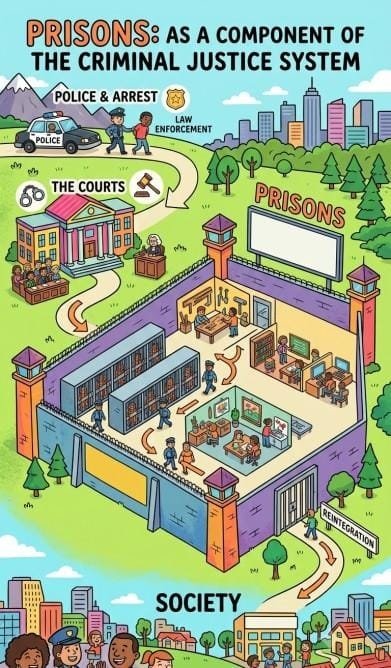
→Prisons are an essential component of the criminal justice system.
→They are institutions established by the State for the custody, care and reformation of persons convicted of offences.
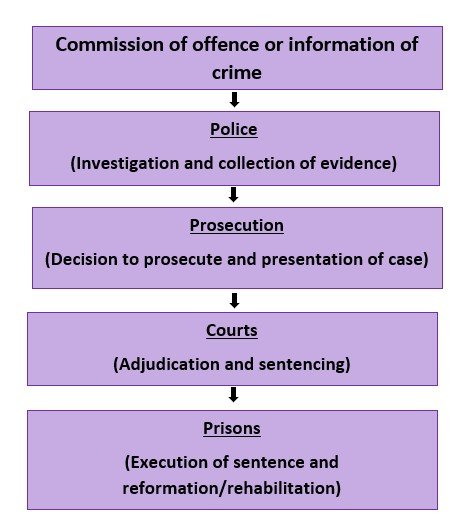
→Prisons serve as a link between the courts (which impose sentences) and the correctional process (which seeks to reform and reintegrate offenders).
→The treatment of prisoners reflects the values of a constitutional democracy, including human dignity, rule of law and respect for human rights.
Prisons are not merely places of punishment, but integral institutions for safe custody, reformation and reintegration.
Position in Criminal Justice System-
Constitutional and Legal Basis-
❖Article 21 – Right to life and personal liberty (includes right to live with human dignity even in prison).
❖Article 14 – Equality and non-arbitrariness.
❖Article 39A – Equal justice and free legal aid.
❖Article 22 – Protection against arbitrary arrest and detention.
❖Prisons Act, 1894 – Main central legislation.
❖State Prison Rules (e.g., West Bengal Prison Rules).
❖Model Prison Manual, 2016 (Ministry of Home Affairs).
❖International Instruments: UDHR 1948, ICCPR 1966, UN Standard Minimum Rules for the Treatment of Prisoners (Nelson Mandela Rules).
Objectives-
Types of Prisons in India-
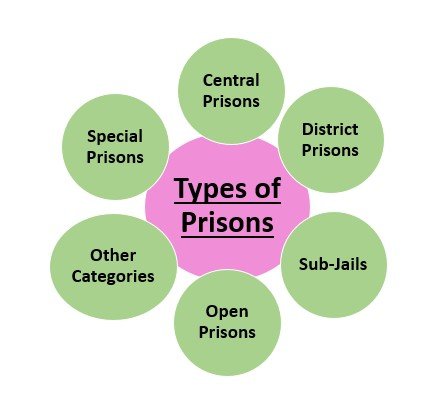
Central Prisons: For serious and long-term convicts.
District Prisons: For short-term convicts and undertrials.
Sub-Jails: In smaller districts.
Open Prisons: For selected low-risk prisoners to promote reformation.
Special Prisons: For specific categories (e.g., women, juveniles, high-security prisoners).
Other Categories: Women's prisons, borstal schools, observation homes (for juveniles as per J.J. Act).
Functions and Role-
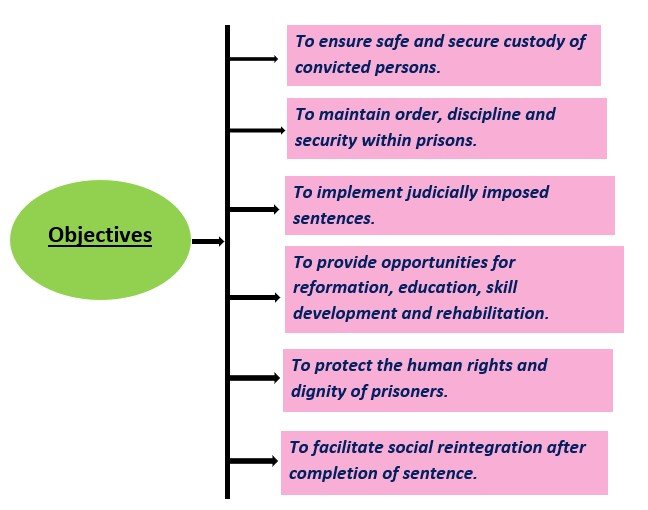
→Safe custody of prisoners.
→Maintenance of discipline and security.
→Implementation of sentences passed by courts.
→Providing basic necessities - food, shelter, clothing and medical care.
→Reformation through education, vocational training, counselling, and recreational activities.
→Classification of prisoners based on risk and behaviour.
→Preparation for release and reintegration.
→Coordination with probation officers, legal aid authorities and social welfare agencies.
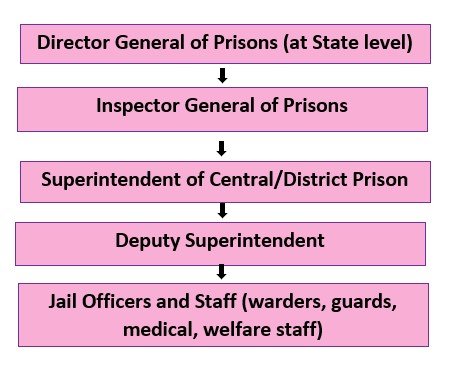
Prison Administration-
Life Inside Prisons-
❖Classification and segregation (e.g., first-timers, repeat offenders).
❖Regulated daily routine (work, education, recreation, counselling).
❖Access to legal aid and communication with family.
❖Provision of healthcare and mental health support.
❖Opportunities for vocational and skill development.
❖Special facilities for women, juveniles, elderly and differently-abled prisoners.
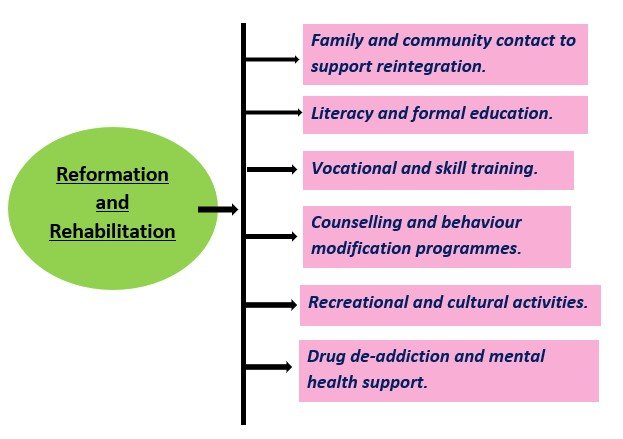
Reformation and Rehabilitation-
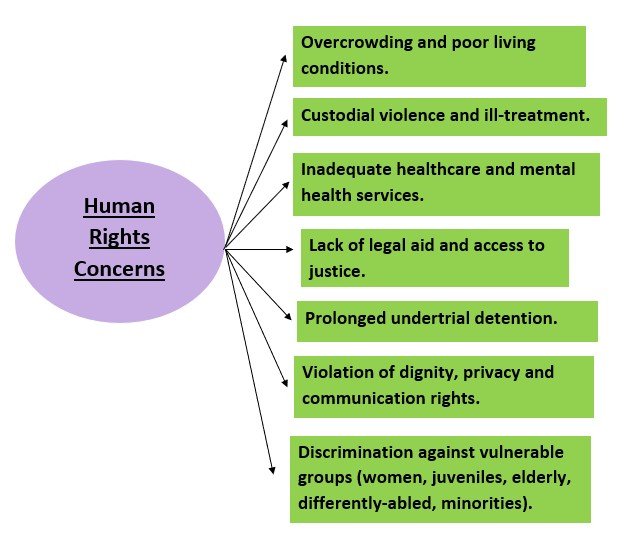
Human Rights Concerns-
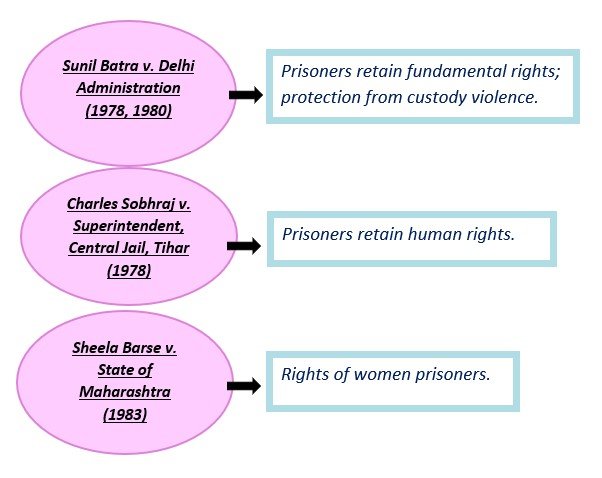
Judicial and Commission Observations-
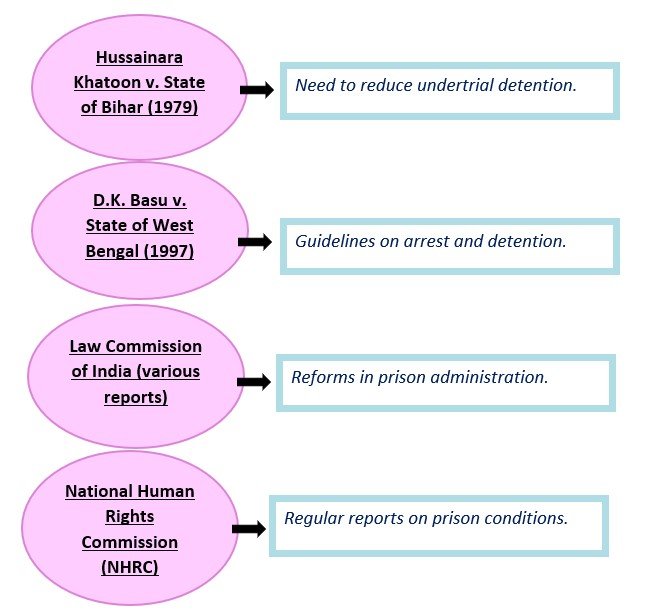
Challenges-
→Overcrowding and inadequate infrastructure.
→Shortage of trained and sensitised staff.
→Inadequate budget and resources.
→Resistance to reform and modernisation.
→Coexistence of undertrials with convicts.
→Drug abuse, violence and gangs within prisons.
→Limited post-release support and reintegration.
Importance in Criminal Justice System-
❖Ensures enforcement of judicially imposed sentences.
❖Provides a structured environment for custody and reformation.
❖Protects society by securely detaining convicted offenders.
❖Contributes to crime control through rehabilitation and reduced recidivism.
❖Reflects the State's commitment to human rights and constitutional values.
❖Acts as a bridge between punishment and reintegration.
Conclusion-
Prisons are a vital component of the criminal justice system. They execute the sentences imposed by courts, maintain public safety and provide opportunities for the reformation and rehabilitation of offenders. However, prison administration must be guided by constitutional values, human rights standards and a reformative philosophy. A humane, rights-based and modern prison system is essential for a just, fair and effective criminal justice system.

we believe in a holistic approach to legal education building not just lawyers, but socially conscious leaders of tomorrow.
