Introduction to Public Policy-
TANMOY MUKHERJI INSTITUTE OF JURIDICAL SCIENCE
Dr. Tanmoy Mukherji
Advocate
Introduction to Public Policy-
Tanmoy Mukherji
Meaning-
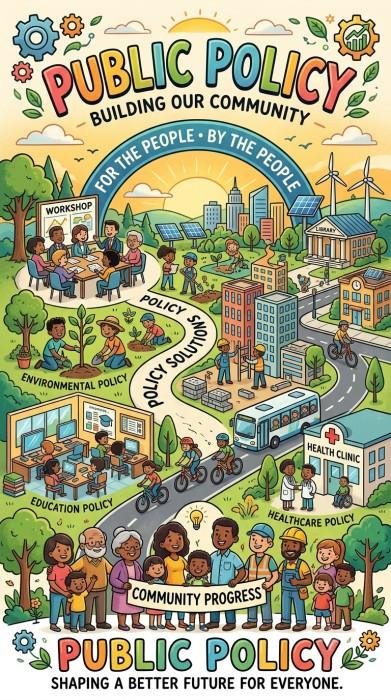
Public Policy refers to the decisions, actions, plans, and programs formulated by the government to solve public problems and promote public welfare.
It includes:
→Laws
→Government decisions
→Administrative actions
→Welfare schemes
→Development programs
Features of Public Policy-
Goal Oriented: Designed to achieve public welfare.
Government Action: Made by state authorities and public institutions.
Dynamic: Changes with time, situation, and needs.
Collective: Applies to the whole society, not individuals.
Law Based: Supported by legal authority and law.
Problem Solving: Aims to solve public issues and problems.
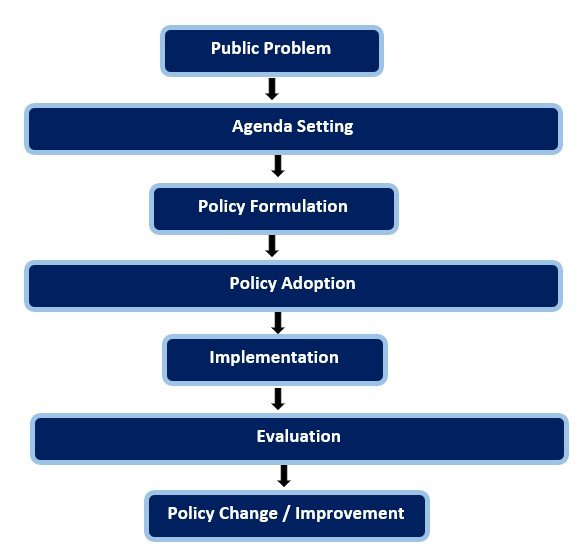
Public Policy Process-
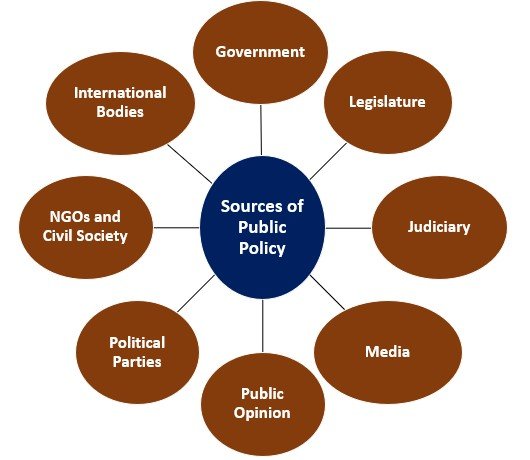
Sources of Public Policy-
Elements of Public Policy-
Policy Goal: The target or objective to be achieved.
Policy Instruments: The methods, tools, and strategies used.
Policy Implementation: Execution of policy by administration.
Policy Evaluation: Checking the results and effectiveness.
Types of Public Problems-
Economic: Poverty, Unemployment, Inflation, Inequality.
Social: Illiteracy, Gender inequality, Child labour, Social discrimination.
Environmental: Pollution, Climate change, Deforestation, Water scarcity.
Administrative: Corruption, Delay in justice, Bureaucratic inefficiency, Red tape.
Objectives of Public Policy-
→Public Welfare
→Economic Development
→Social Justice
→National Security
→Equality and Welfare
→Administrative Efficiency
→Protection of Rights
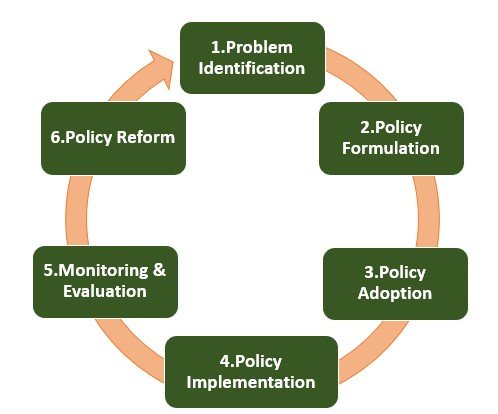
PUBLIC POLICY CYCLE-
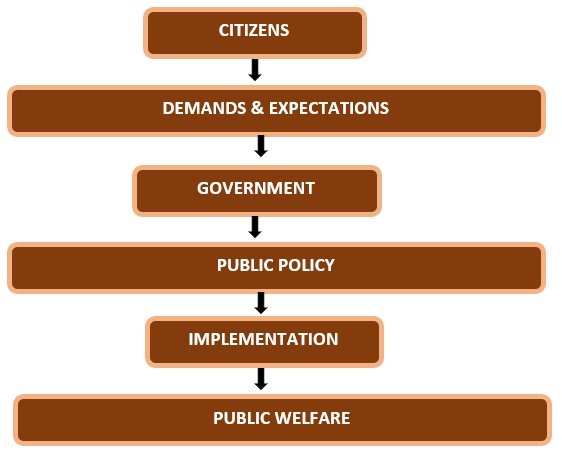
RELATION BETWEEN PEOPLE AND POLICY-
ROLE OF GOVERNMENT IN PUBLIC POLICY-
|
Legislature |
Makes laws and frames legal policies.
|
|
Executive |
Frames policies and takes decisions.
|
|
Administration |
Implements policies and runs programs.
|
|
Judiciary |
Reviews the legality and ensures justice.
|
APPROACHES TO PUBLIC POLICY-
Institutional Approach: Focus on government institutions and their roles.
Group Theory: Policies emerge from pressure and influence of groups.
Elite Theory: Policies reflect the interests of the elite class.
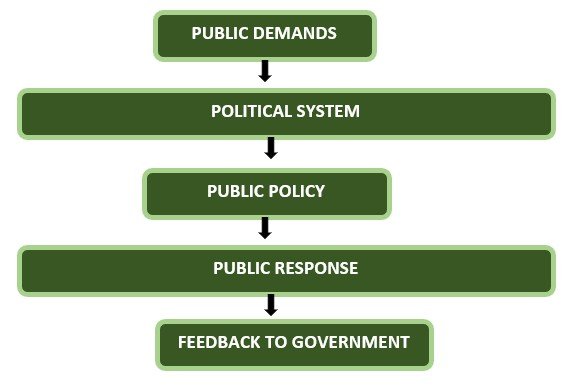
Systems Theory: Policy is a response to inputs and feedback from environment.
Rational Approach: Policy based on reason, data, cost-benefit analysis.
SYSTEMS THEORY MODEL-
EXAMPLES of Public Policy-
→National Education Policy (NEP)
→Digital India
→Swachh Bharat Mission
→Ayushman Bharat
→GST Policy
→Make in India
IMPORTANT THINKERS OF PUBLIC POLICY-
→Woodrow Wilson (1856–1924): Father of Public Administration
→Thomas R. Dye: Definition of Public Policy
→Harold Lasswell (1902–1978): Policy sciences approach
→Herbert A. Simon (1916–2001): Decision-making theory
CONCLUSION:
Public policy is an essential instrument of governance. It helps governments identify public problems, formulate solutions and ensure welfare and development. Effective public policy combined with efficient public administration leads to social justice, democratic governance and national progress.
"Public policy is whatever government chooses to do or not to do."
— Thomas R. Dye

we believe in a holistic approach to legal education building not just lawyers, but socially conscious leaders of tomorrow.
