ELECTION COMMISSION OF INDIA
Dr. Tanmoy Mukherji
Advocate
ELECTION COMMISSION OF INDIA-
Tanmoy Mukherji
Advocate
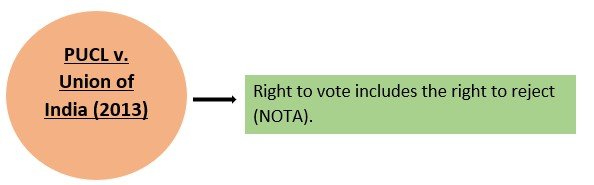
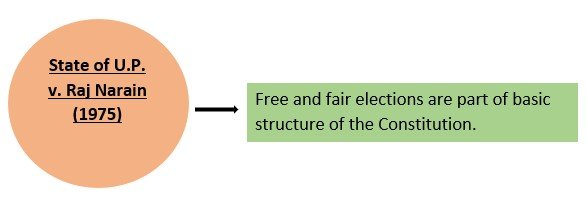
The Election Commission of India (ECI) is an independent constitutional authority entrusted with the responsibility of conducting free, fair and impartial elections, which form the basic structure of the Constitution.
The Supreme Court has repeatedly emphasized that democracy cannot survive without free and fair elections, and the ECI is the guardian of the electoral process.
Article 324 of the Constitution of India is the source of the Commission’s authority.
Constitutional Provisions-
Article 324(1) – Superintendence, direction and control of elections vested in ECI
Article 324(2) – Composition of the Commission
Article 324(5) – Conditions of service and removal
Article 103 & 192 – Advisory role in disqualification of MPs and MLAs
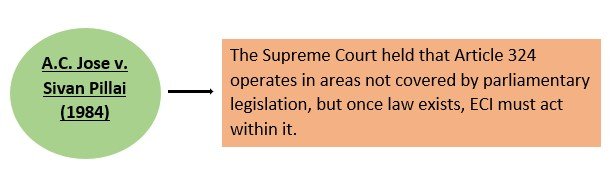
Reference Case-
Composition of the Election Commission-
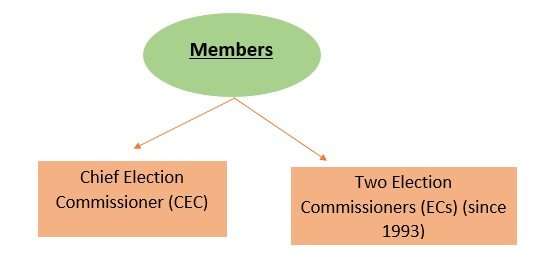
(a) Members-
(b) Appointment-
Appointed by the President of India
Tenure: 6 years or 65 years, whichever is earlier
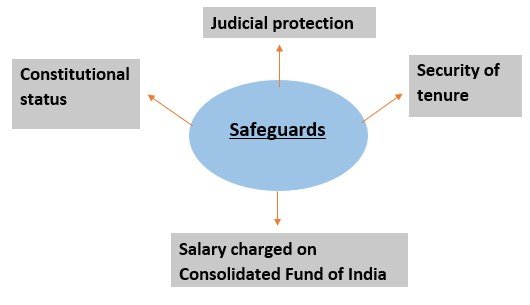
(c) Removal & Safeguards-
CEC:
Can be removed only through impeachment, like a Supreme Court Judge.
Election Commissioners:
Removed by President on recommendation of the CEC.
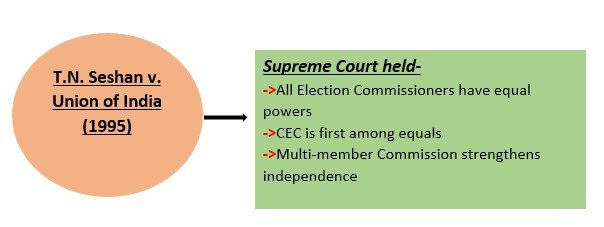
Reference Cases-
Powers of the Election Commission-
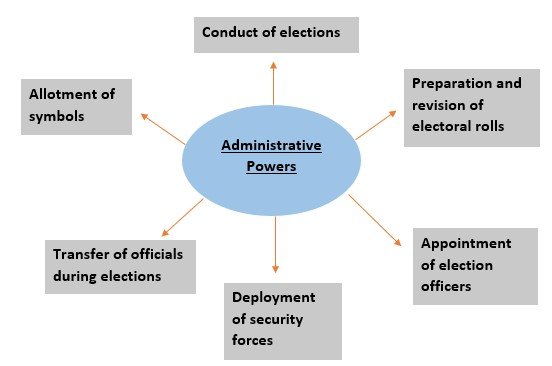
A. Administrative Powers-
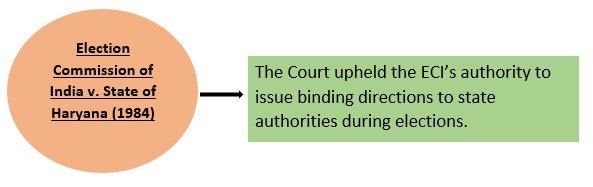
Reference Cases-
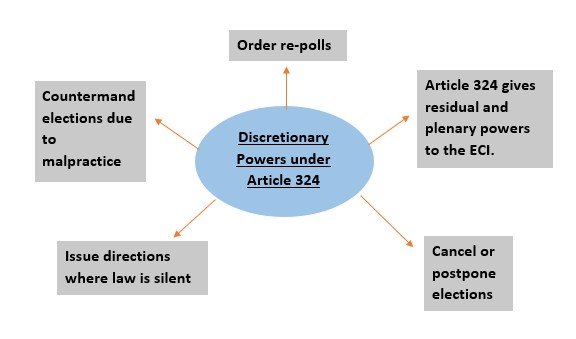
B. Discretionary Powers under Article 324
Landmark Case:
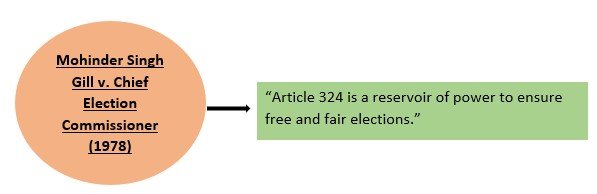
This is the most important case on ECI powers.
C. Quasi-Judicial Powers-
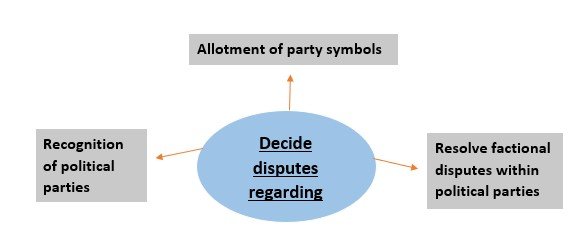
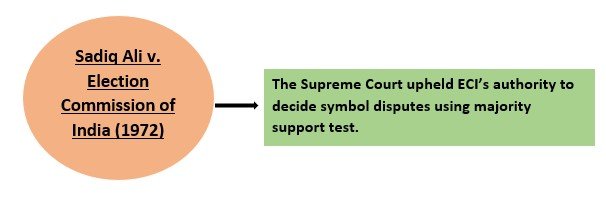
Landmark Case:
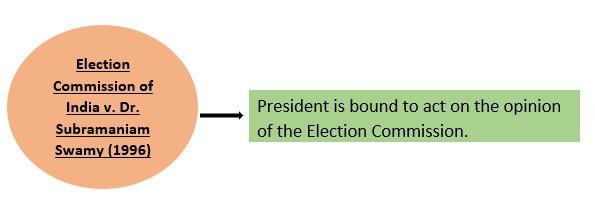
D. Advisory Powers-
Advises:
→President (Article 103)
→Governor (Article 192)
On disqualification of:
→MPs
→MLAs
Reference Case
Functions of the Election Commission-
A. Conduct of Elections-
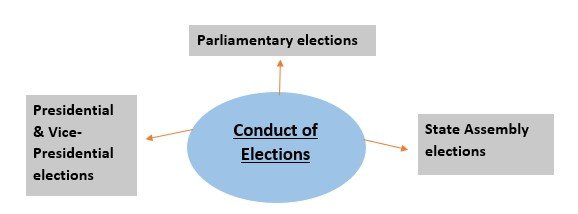
Reference Case
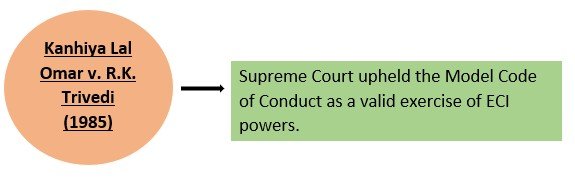
B. Enforcement of Model Code of Conduct (MCC)-
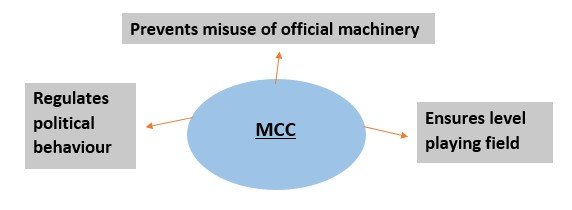
Reference Case-
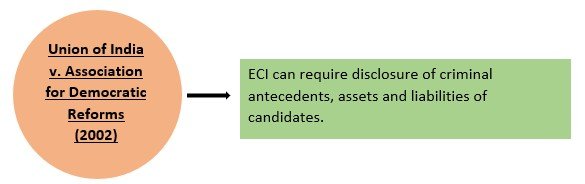
C. Political Party Regulation-
Registration of political parties
Recognition as:
→National Party
→State Party
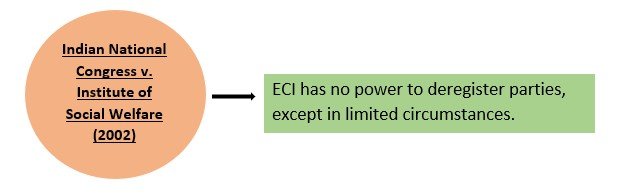
Reference Case-
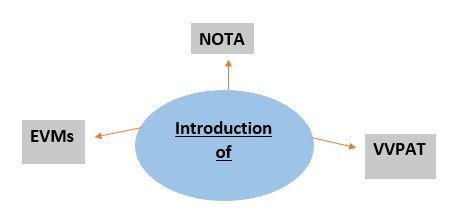
D. Voter Awareness & Electoral Reforms-
Systematic Voters’ Education and Electoral Participation (SVEEP)
Reference Case-
Independence of the Election Commission-
Reference Case-
Critical Evaluation-
Strengths-
→Independent constitutional authority
→Wide discretionary powers
→Judicial support
Limitations-
→Appointment process lacks transparency
→No power to deregister political parties
→MCC is not legally enforceable
The Election Commission of India stands as the backbone of Indian democracy. Through Article 324, judicial interpretation, and constitutional safeguards, it ensures that elections remain free, fair and credible, reinforcing the basic structure of the Constitution.

we believe in a holistic approach to legal education building not just lawyers, but socially conscious leaders of tomorrow.
