DOCTRINE OF RELATION BACK IN HINDU LAW-
Dr. Tanmoy Mukherji
Advocate
DOCTRINE OF RELATION BACK IN HINDU LAW-
Tanmoy Mukherji
Advocate
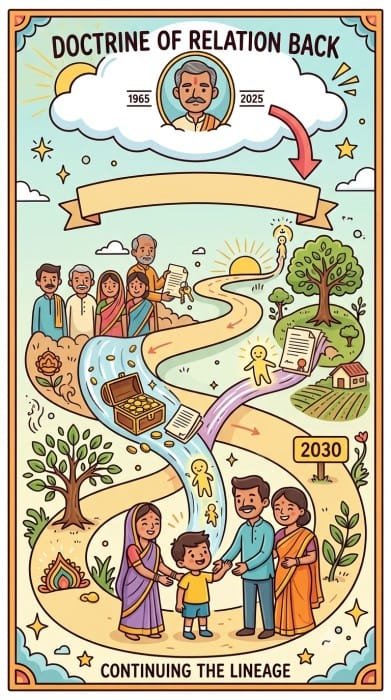
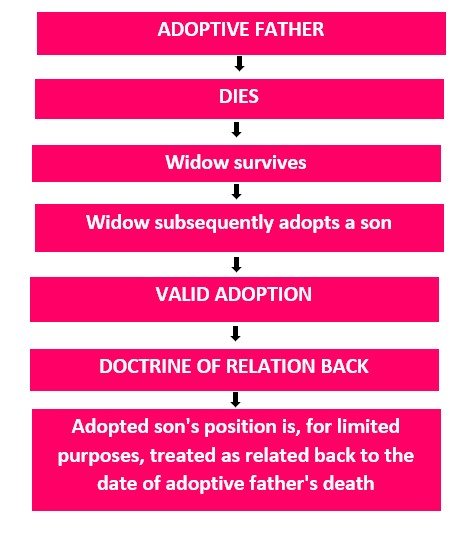
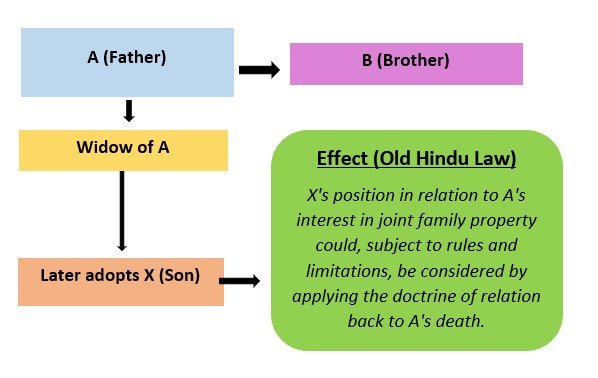
The Doctrine of Relation Back is a traditional doctrine of Hindu adoption law. Under the old uncodified Hindu law, when a widow validly adopted a son after her husband's death, the law treated the adopted son, for certain purposes, as if his position related back to the death of the adoptive father.
BASIC CONCEPT-
OBJECTS OF THE DOCTRINE-
❖ To continue the lineage of the deceased adoptive father.
❖ To place the adopted son in the position of a son in the adoptive family.
❖ To determine questions of inheritance and property.
❖ To give effect to the traditional conception of adoption.
❖ To operate as a legal fiction for limited retrospective effect.
❖ To protect family property and coparcenary rights, subject to limitations.
SCOPE – WHERE DOES IT APPLY?
RELATION BACK IN JOINT HINDU FAMILY-
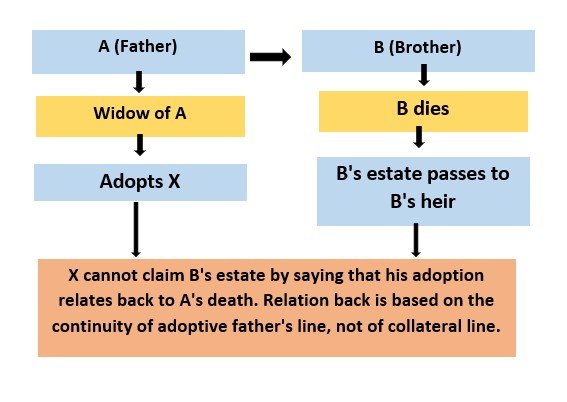
LIMITATION – COLLATERAL PROPERTY-
OLD HINDU LAW vs MODERN LAW
|
OLD HINDU LAW
|
Hindu Adoptions and Maintenance Act, 1956
|
|
Doctrine developed by judicial interpretation.
|
Governed by statute.
|
|
Widow's adoption could have retrospective effect.
|
Effect of adoption mainly from date of adoption.
|
|
Position related back to adoptive father's death (for limited purposes).
|
Section 12 HAMA applies.
|
|
Continuity of adoptive father's line was central.
|
Vested estates protected by Section 12(c).
|
|
Could affect inheritance subject to judicial limitations.
|
Relation back arguments subject to statutory scheme.
|
SECTION 12, HAMA, 1956-
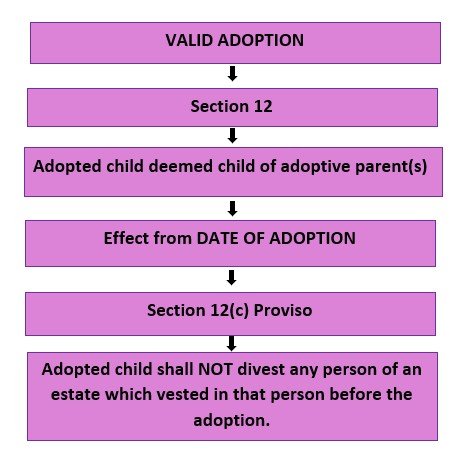
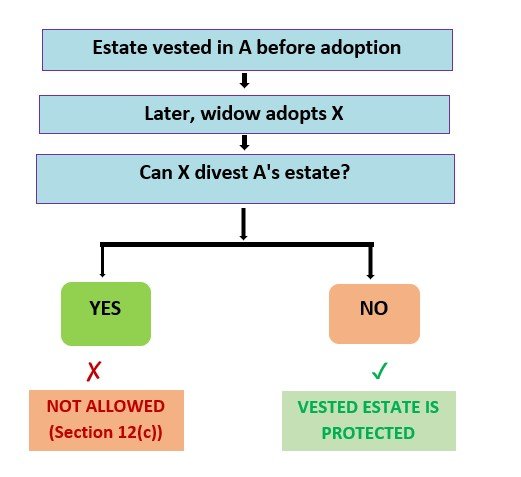
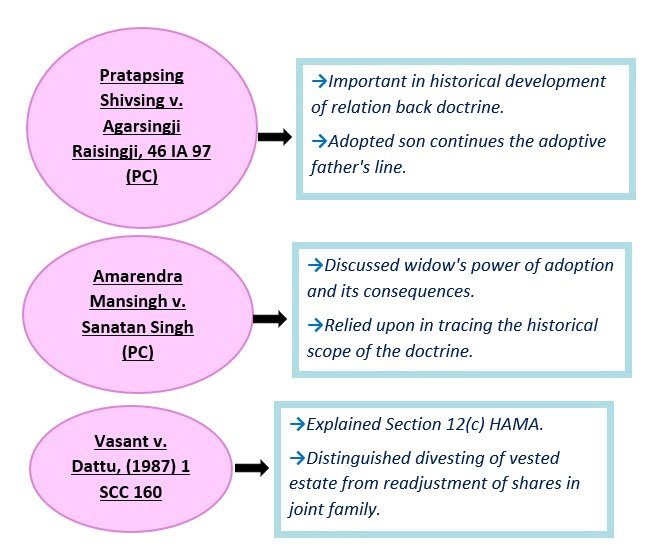
SECTION 12(c) – VESTED ESTATE PROTECTED-
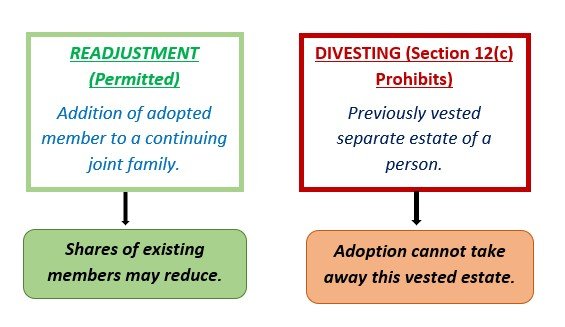
DIVESTING vs READJUSTMENT
(From Vasant v. Dattu, (1987) 1 SCC 160)-
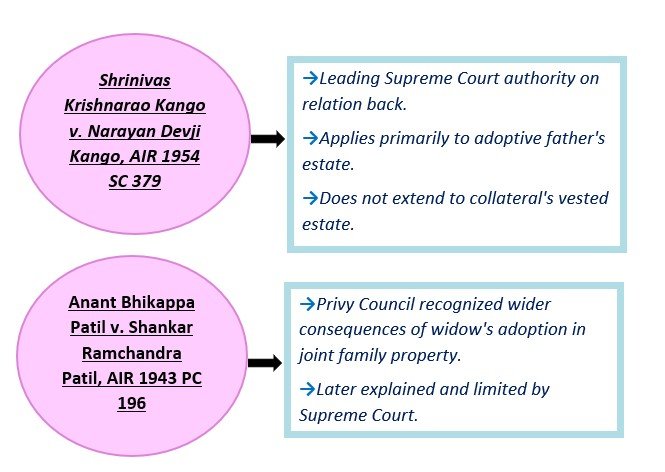
IMPORTANT CASE LAWS-
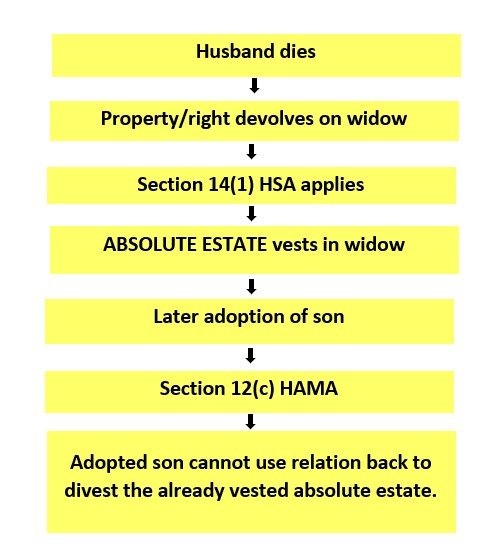
RELATION BACK + SECTION 14 of HSA-
OLD DOCTRINE – WHEN IT COULD OPERATE-
✓ Widow's valid adoption after husband's death.
✓ No female issue already existing.
✓ Adopted son could claim estate of adoptive father.
✓ Right could relate back to the date of husband's death.
✓ Subject to rules of Mitakshara/Dayabhaga and other limitations.
OLD DOCTRINE – WHEN IT COULD NOT OPERATE-
✗ Where property had vested in another before adoption.
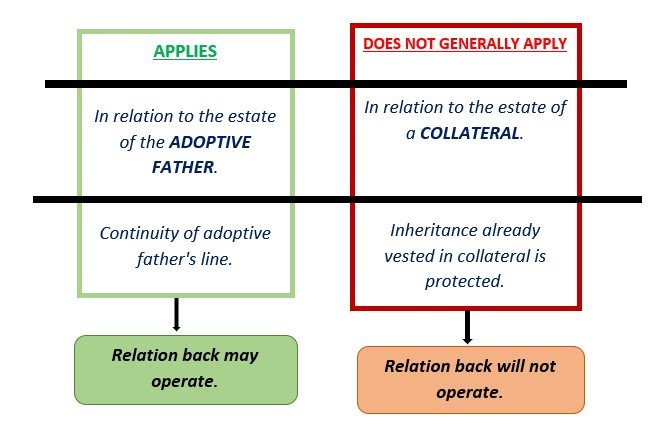
✗ Where the claim is to a collateral's estate.
✗ Where adoption is invalid or void.
✗ Where statutory provisions bar the claim.
✗ Where it leads to divesting vested rights (S.12(c) HAMA).
Significance-
The doctrine of relation back is a legal fiction under old Hindu law, applicable for limited purposes to preserve the line of the adoptive father. Under modern law, Section 12 of HAMA, 1956 governs the consequences and protects vested estates.
"The doctrine of relation back is a legal fiction to preserve the line of the adoptive father, but it cannot defeat a vested right under the law."

we believe in a holistic approach to legal education building not just lawyers, but socially conscious leaders of tomorrow.
