DOCTRINE OF FACTUM VALET IN HINDU LAW-
Dr. Tanmoy Mukherji
Advocate
DOCTRINE OF FACTUM VALET IN HINDU LAW-
Tanmoy Mukherji
Advocate
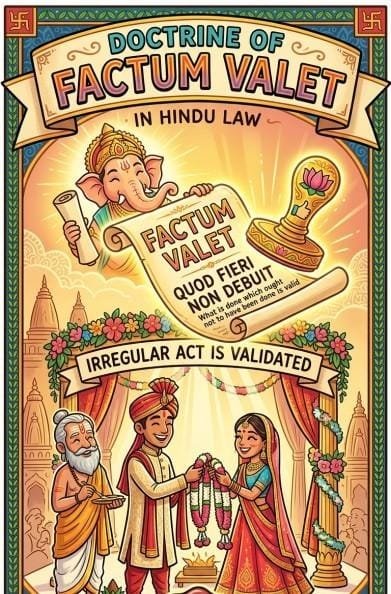
Factum Valet is an important doctrine of classical Hindu Law. The expression is derived from the Latin maxim:
"Factum valet quod fieri non debuit." – Meaning: "What ought not to have been done may nevertheless be valid when it has been done."
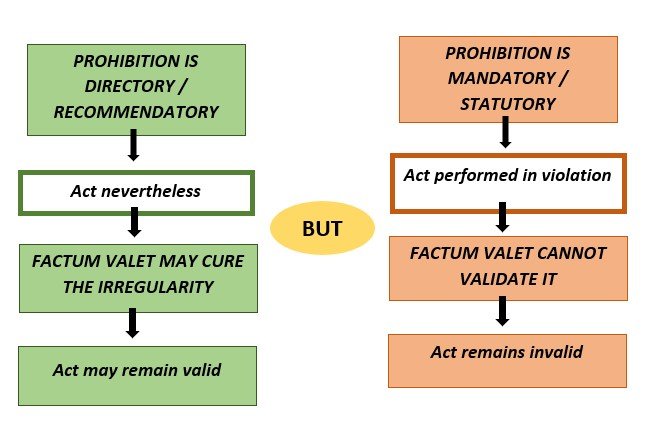
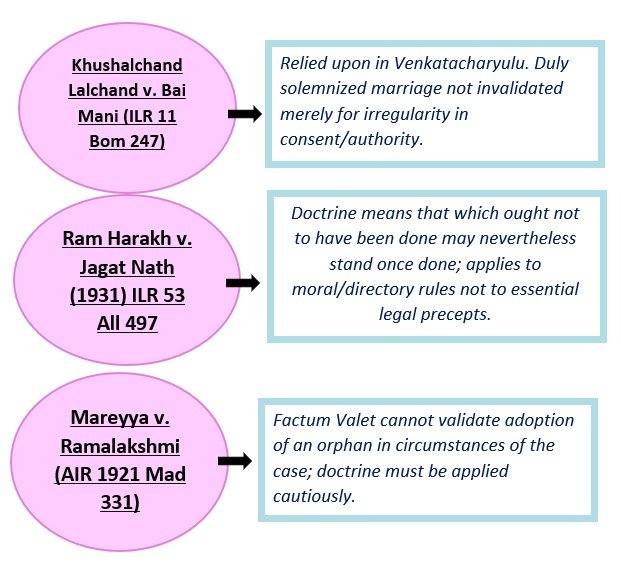
In simple terms, an act prohibited merely by a directory, moral, or recommendatory rule may, once completed, remain legally effective; but the doctrine cannot validate an act prohibited by a mandatory rule of law.
BASIC PRINCIPLE-
WHAT DOES IT MEAN?
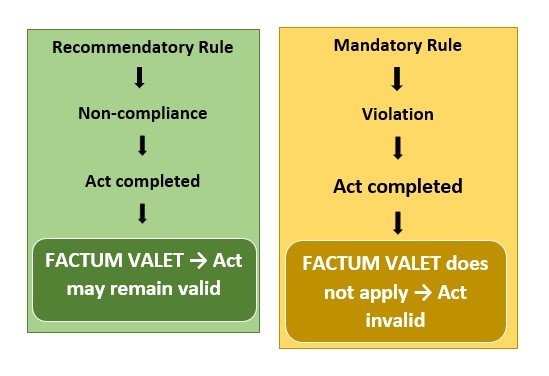
An act done in violation of a rule which is directory, recommendatory or relating to preference may, once completed, be treated as valid.
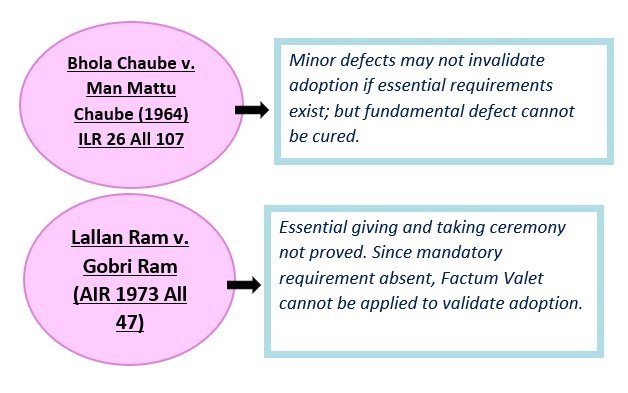
❖ It does NOT apply where the rule is mandatory or essential for the validity of the act.
ILLUSTRATION-
IMPORTANCE IN HINDU LAW-
→Helps in interpreting classical Hindu law which contains many directory or recommendatory rules.
→Recognizes the validity of certain completed acts despite minor irregularities.
→Prevents injustice and disturbance of settled transactions.
→Distinguishes between mandatory provisions and directory provisions.
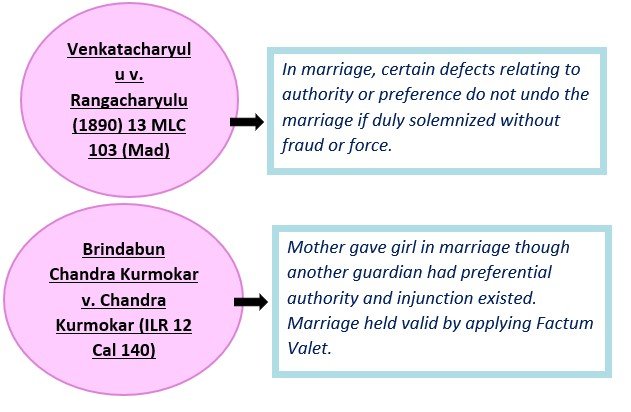
→Applied mainly in questions of marriage and adoption in classical texts.
→Shows the flexible and equitable character of classical Hindu jurisprudence.
→However, cannot override statutory provisions in modern Hindu law.
FACTUM VALET AND ADOPTION-
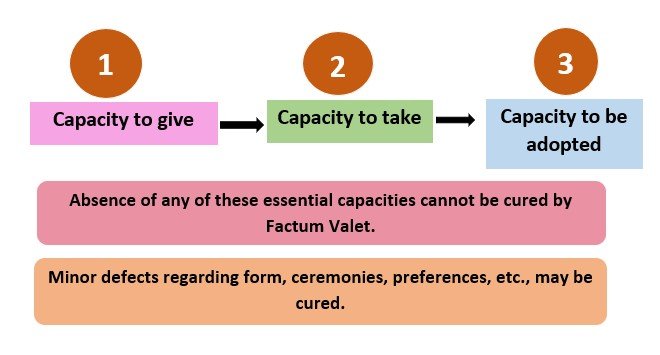
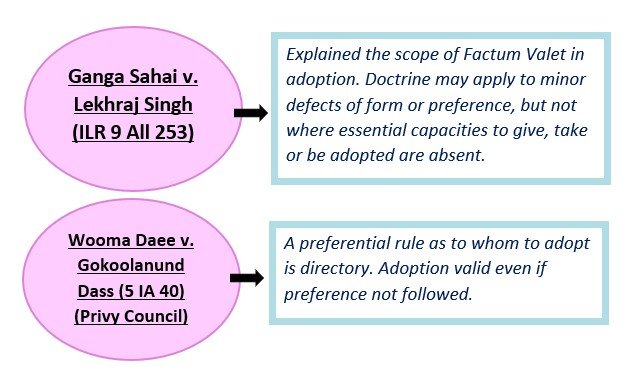
The doctrine is often discussed in adoption.
Three essential capacities (ILR 9 All 253)
WHEN DOES FACTUM VALET APPLY?
|
Applies where:
|
Does NOT apply where:
|
|
→Rule is directory, recommendatory or moral. →Requirement is relating to preference. →Irregularity is minor or procedural. →Act is otherwise substantially valid. →There is no fraud, force or injury.
|
→Rule is mandatory or statutory. →Essential requirement is absent. →Act is void at its foundation. →Transaction is prohibited by statute. →Capacity to give, take or be adopted is lacking.
|
CLASSICAL HINDU LAW vs MODERN LAW-
|
Classical Hindu Law |
Modern Hindu Law |
|
Based on Dharma, Shruti, Smriti, custom and equity principles. |
Based on Constitution, Statutes and Judicial precedents.
|
|
Directory rules were common in texts. |
Statutory provisions are binding.
|
|
Factum Valet could cure irregularities. |
Factum Valet cannot override mandatory statutory requirements.
|
|
Flexible, duty-oriented jurisprudence. |
Rights + duties regulated by codified laws.
|
|
Applied mainly in marriage, adoption, inheritance. |
Applied only to the extent consistent with statutes.
|
IMPORTANT CASE LAWS-
APPLICATION vs NON-APPLICATION-
|
FACTUM VALET MAY APPLY
|
FACTUM VALET DOES NOT APPLY
|
|
→Directory requirement violated →Mere preference disregarded →Minor procedural / formal defect →Ceremonial irregularity →Completed act otherwise substantially valid →No fraud, force or injury
|
→Mandatory requirement violated →Essential legal capacity absent →Act void at its foundation →Essential act omitted →Act prohibited by statute →Rights of others seriously prejudiced
|
Flowchart-
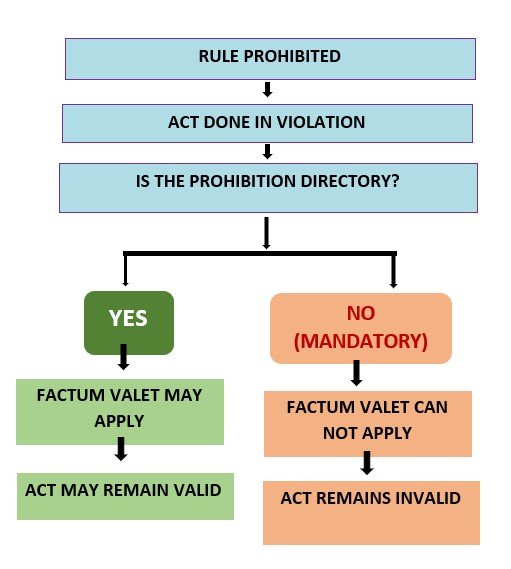
Factum Valet can cure an irregularity, but it cannot legalise an act that the law expressly prohibits.
❖Directory prohibition + Completed act → Factum Valet may apply
❖Mandatory prohibition + Completed act → Factum Valet does not apply
Significance-
→Factum Valet applies only to directory rules.
→It does NOT apply to mandatory rules.
→Mainly used in marriage and adoption.
→Cannot cure absence of essential capacity.
→Modern statutes prevail over classical doctrines.
→Doctrine promotes stability of completed acts.
CONCLUSION-
Factum Valet is a doctrine of classical Hindu law which validates a completed act done in violation of a directory or recommendatory rule, but it cannot cure a fundamental illegality or override a mandatory statutory provision.

we believe in a holistic approach to legal education building not just lawyers, but socially conscious leaders of tomorrow.
