Defamation-
TANMOY MUKHERJI INSTITUTE OF JURIDICAL SCIENCE
Dr. Tanmoy Mukherji
Advocate
Defamation-
Tanmoy Mukherjee
Advocate
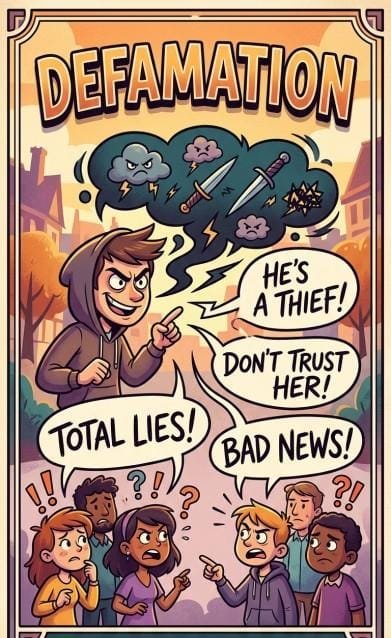
-According to Winfield "Defamation" is the publication of a statement which tends to lower a person in the estimation of right thinking members of society generally. Of which tends to make them shunned or avoided.
-According to Salmond "Defamation" is the publication of false and defamatory statements concerning another person, without lawful justification.
-According to Black's Law Dictionary "Defamation" is the act of harming the reputation of another by making a false statement to a third person.
-Lord Atkin in Sin vs Stretch said that "defamation" is a statement which tends to lower the plaintiff in the estimation of right thinking members of society generally.
-According to Dr. Mukherjee "Defamation" is the publication of a false statement about a person without justification which tends to lower the reputation of that person in the estimation of right thinking members of society generally.
Types of Defamation-
Defamation is of two types-
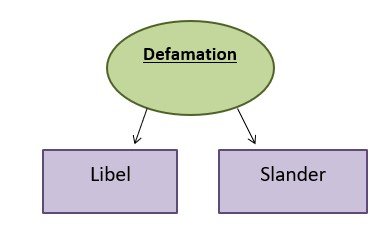
Libel-
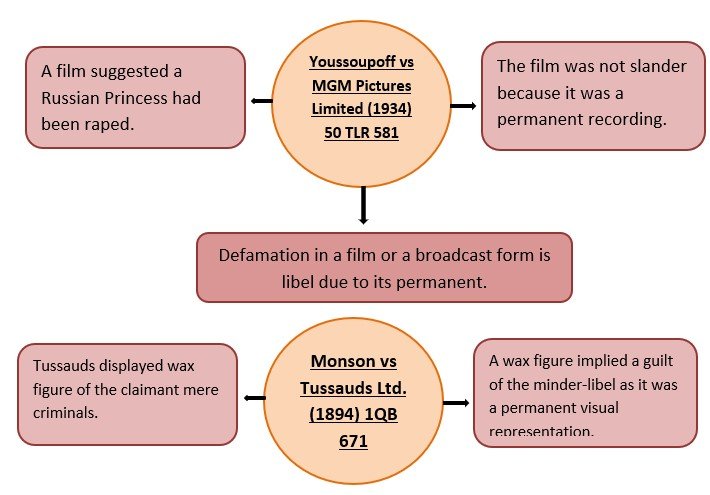
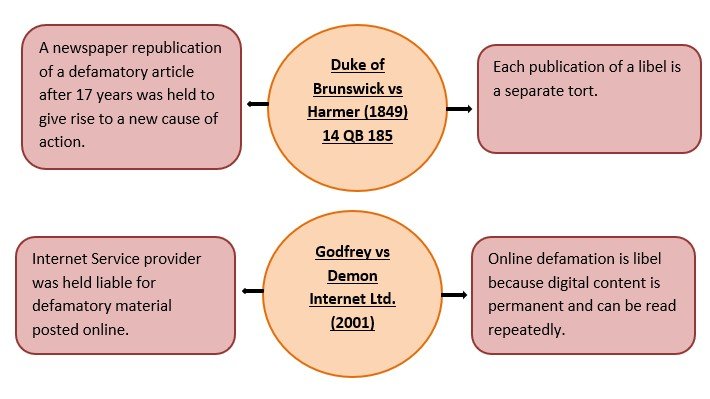
Libel is defamation expressed in some permanent or physical form-such as writing, printing, pictures, films or online publications.
According to Winfield Libel is defamation by written or printed words or by any form of communication embodied in a permanent form.
Features:-
1. Permanent in nature-
Recorded in a lasting medium (paper, film, internet).
2. Actionable per se-
Claimant does not need to prove special damage, the law presumes harm.
3. Criminal and Civil liability-
Libel may be both a tort and a crime.
4. Wider publication-
Reaches a larger audience, thus causing greater reputational harm
Examples-
Reference cases-
Slander-
Slander is defamation in a transient or non-permanent form, usually through spoken words, gestures or sounds.
According to Salmond, slander is the publication of a defamatory statement in a transient form such as spoken words or gestures.
Features-
1. Transitory- Not recorded or preserved.
2. Actionable only upon proof of actual damage- Not actionable per se, except in special cases.
3. Difficult to proof- Ephemeral in nature and often based on oral evidence.
Examples-
i) A false verbal accusation in a public meeting.
ii) Gossip that someone committed adultery.
iii) Defamatory gestures.
When Slander is actionable per se-
Slander is not actionable per se, meaning that the plaintiff must prove special damage—actual, pecuniary or material loss—resulting from the slanderous statement.
Reference Case-
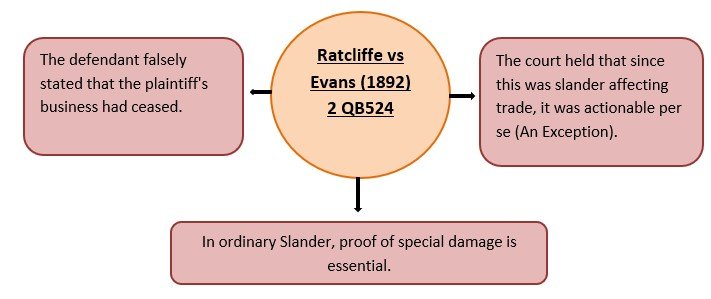
Slander actionable per se-
There are some exceptions where slander is actionable without proof of special damage-
1.Imputation of a crime-
A false statement imputes to the plaintiff the commission of a criminal offence punishable by imprisonment. It is actionable per se.
Reference Case-
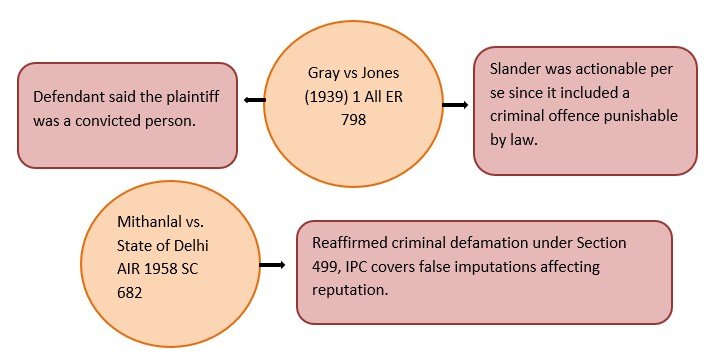
2.Imputation of a contagious or loathsome Disease:
If someone falsely alleges that another have a contagious on Loathsome Disease (e.g., Leprosy, venereal disease, AIDS, COVID-19) it is actionable per se.
Reference Case-
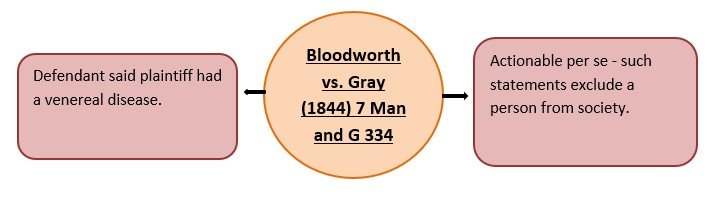
3.Imputation affecting office, Profession, trade or business-
A false statement injures a person in their professional reputation on business is actionable per se.
Reference Cases-
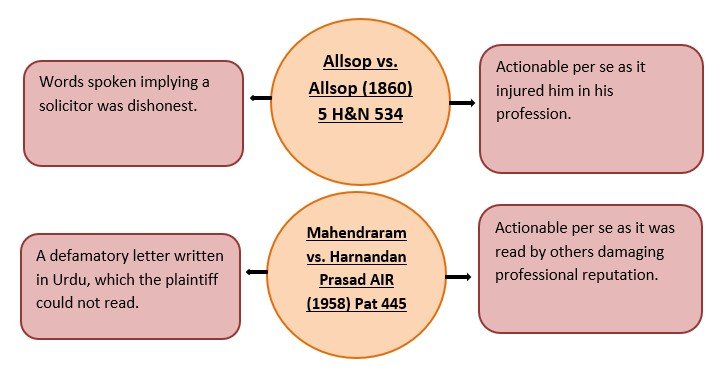
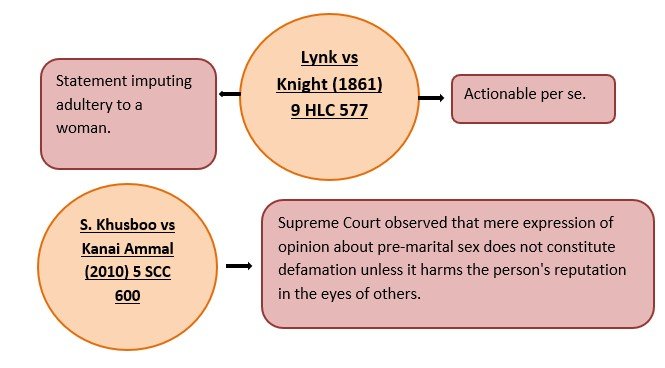
4.Imputation of unchastity-
Words imputing unchastity to a woman wear traditionally actionable per se.
Reference Case-
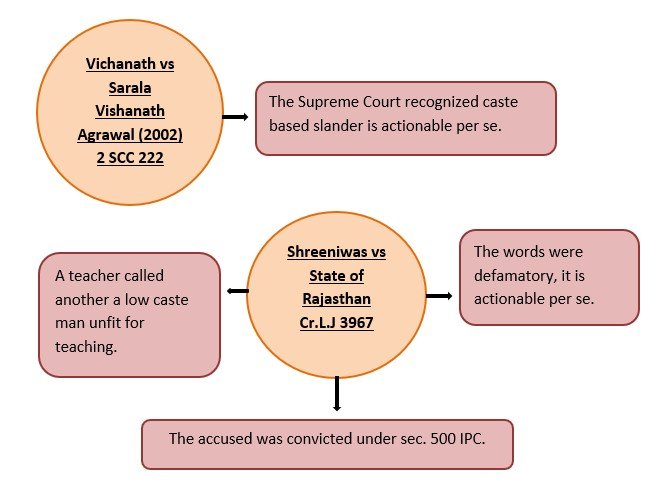
Cast based slander-
Cast based Slander is actionable per se.
Reference Case-

we believe in a holistic approach to legal education building not just lawyers, but socially conscious leaders of tomorrow.
