The conditions to be satisfied by an invention to be patentable (Intellectual Property Rights)-
Dr. Tanmoy Mukherji
Advocate
The conditions to be satisfied by an invention to be patentable
(Intellectual Property Rights)-
Tanmoy Mukherji
Advocate
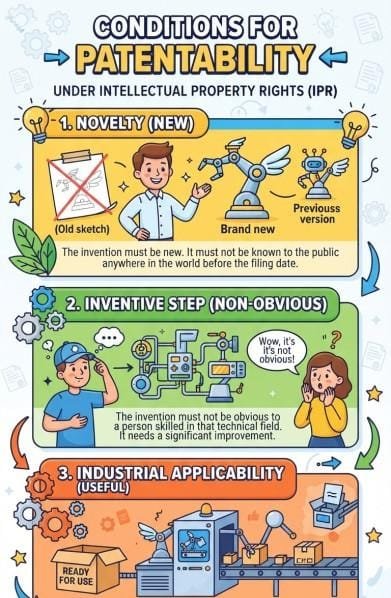
A patent is an exclusive statutory right granted by the Government to an inventor for a new invention, allowing him to exclude others from making, using, selling, or importing the invention for a period of 20 years.
Definition —
According to sec 2(1)(j) of the Patents Act, 1970 "Invention" means a new product or process involving an inventive step and capable of industrial application.
Essential Conditions of Patentability-
1) Novelty (new invention) -
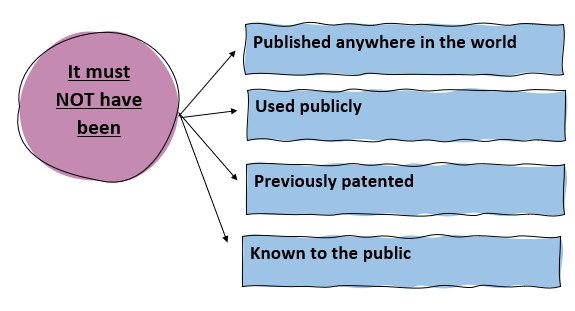
The invention must be absolutely new.
Reference. Case-
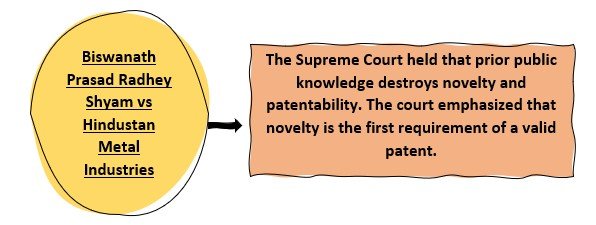
What is already known can't be patented.
2) Inventive step (non-obviousness)-
Sec 2(1) (ja)-
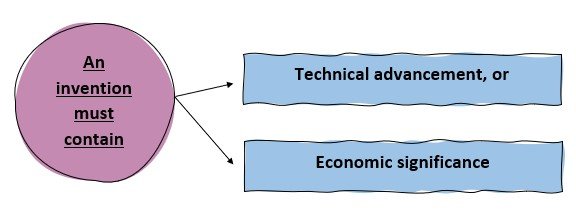
and should not be obvious to a person skilled in the art.
Example-
→Adding a handle to an already existing cup is OBVIOUS.
→Developing a self-heating smart cup is INVENTIVE.
Test-
Technical advancement + Economic significance + Not obvious = Inventive step
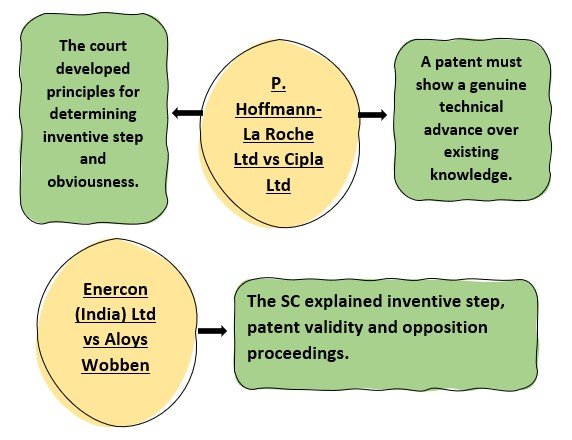
Reference. Case-
3) Industrial applicability-
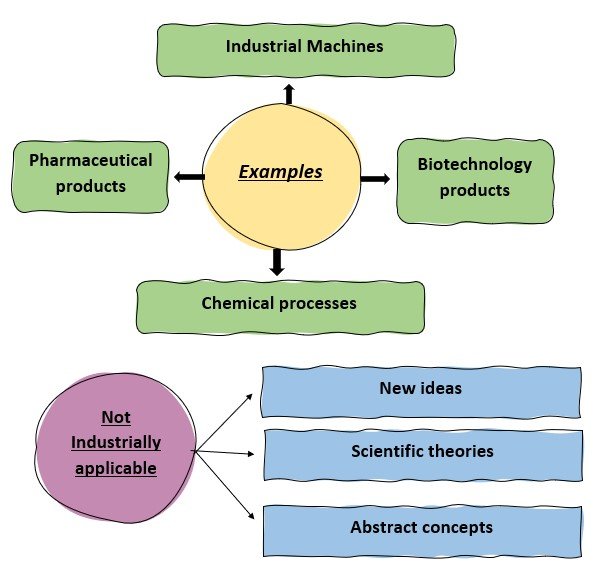
Sec 2(1) (ac)-The invention must be capable of being made or used in an industry.
4) Utility-
The invention must provide a useful result.
Example-
A machine claiming perpetual motion without scientific proof lacks utility.
5) Patentable subject matter-
The invention must not fall under sec 3 & sec 4 of the Patents Act, 1970.
Section 3: — What are not inventions-
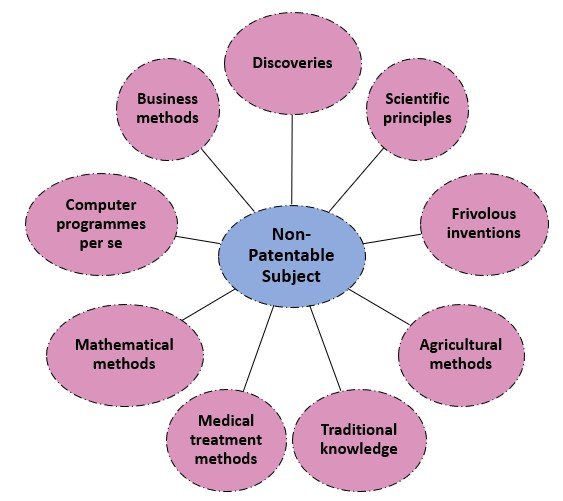
Section 4 - No patent can be granted for inventions relating to atomic energy.
6) Enhanced Efficacy Test-
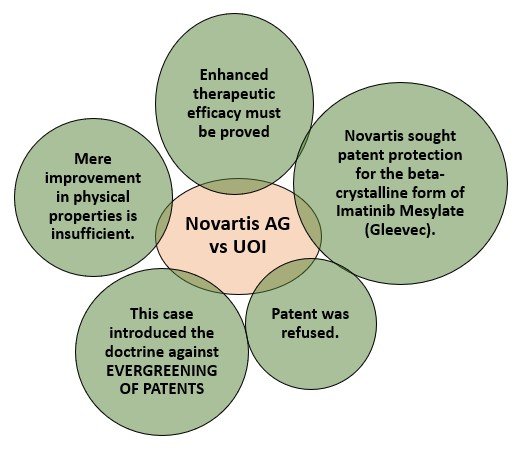
Sec 3(d)- A new form of a known substance is not patentable unless it shows enhanced efficacy.
Reference Case –

we believe in a holistic approach to legal education building not just lawyers, but socially conscious leaders of tomorrow.
